
If you’ve been struggling with pelvic pain—whether it’s a dull ache, sharp discomfort, or that nagging sense of instability—you’re not alone. For so many moms, pregnancy and postpartum life throw the pelvis off balance, leaving you with hip pain, low back aches, and a frustratingly wobbly core. But what if I told you there’s a way to tackle this pain head-on?
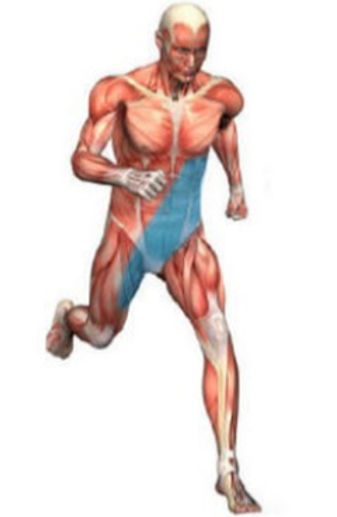
Meet your Anterior Oblique Sling, a set of core and pelvic-supporting muscles that could just be the game-changer you’ve been waiting for! This set of muscles is a major player in stabilizing your pelvis and keeping you moving strong—especially during pregnancy and postpartum.
Why do we get pelvic pain?
During pregnancy and postpartum, you may experience pelvic pain due to shifts in body alignment, weight distribution, and hormonal changes that soften your ligaments in preparation for birth. This can lead to issues like pubic symphysis dysfunction (PSD), where the joint at the front of the pelvis becomes overly mobile, causing pain in the pubic bone, hips, and even lower back. As your belly grows, core muscles—especially those in the anterior oblique sling, which stabilize the pelvis and spine—can become stretched and weakened. Without adequate support from these muscles, pelvic instability increases, worsening pain. Strengthening the anterior oblique sling can help restore this stability, reducing PSD symptoms and supporting a more aligned, pain-free posture.
Your Anterior Oblique Slings
- Are made up of your obliques and opposite adductor (inner thigh) muscles…so you have two slings that cross over your body!
- Cross over your pubic symphysis (the joint in the front of your pelvis, where the left and right sides of your pelvis meet)
- Keep your pubis symphysis more stable and secure (less movement = less pain)
- Help with rotational movements, acceleration, deceleration, and changing directions
- Activate when your torso and opposite inner thigh come towards one another
The Cure?
With a few targeted exercises, you can tap into this powerful muscle chain to bring stability back to your pelvis, give your body a sturdier foundation, reduce pain, and feel stronger in your everyday movements (like getting up off the floor or carrying the car seat). Let’s break down what your Anterior Oblique Sling (AOS) is, how it works, and look at 4 moves you can add to your workout routine that will help you feel supported from the inside out.
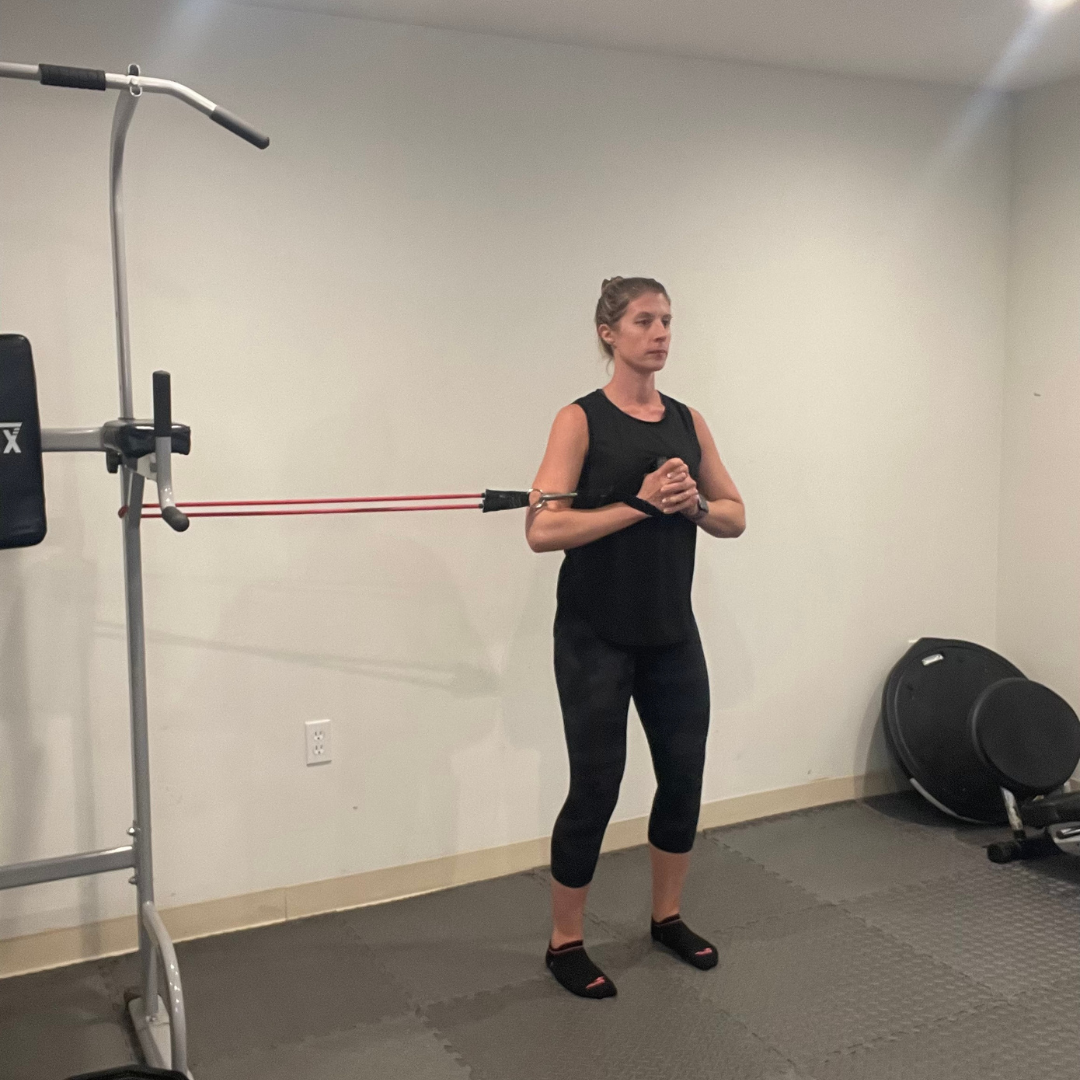
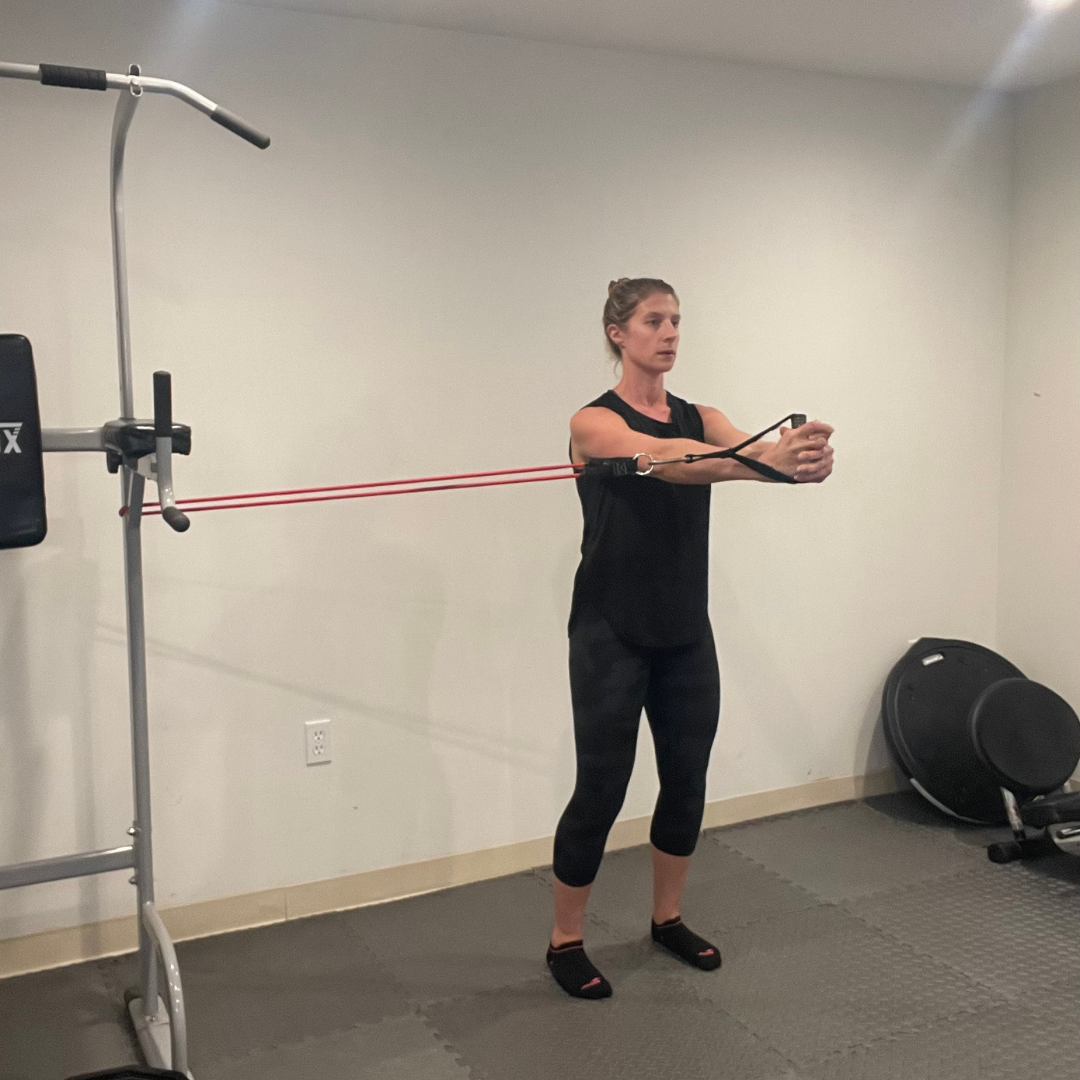
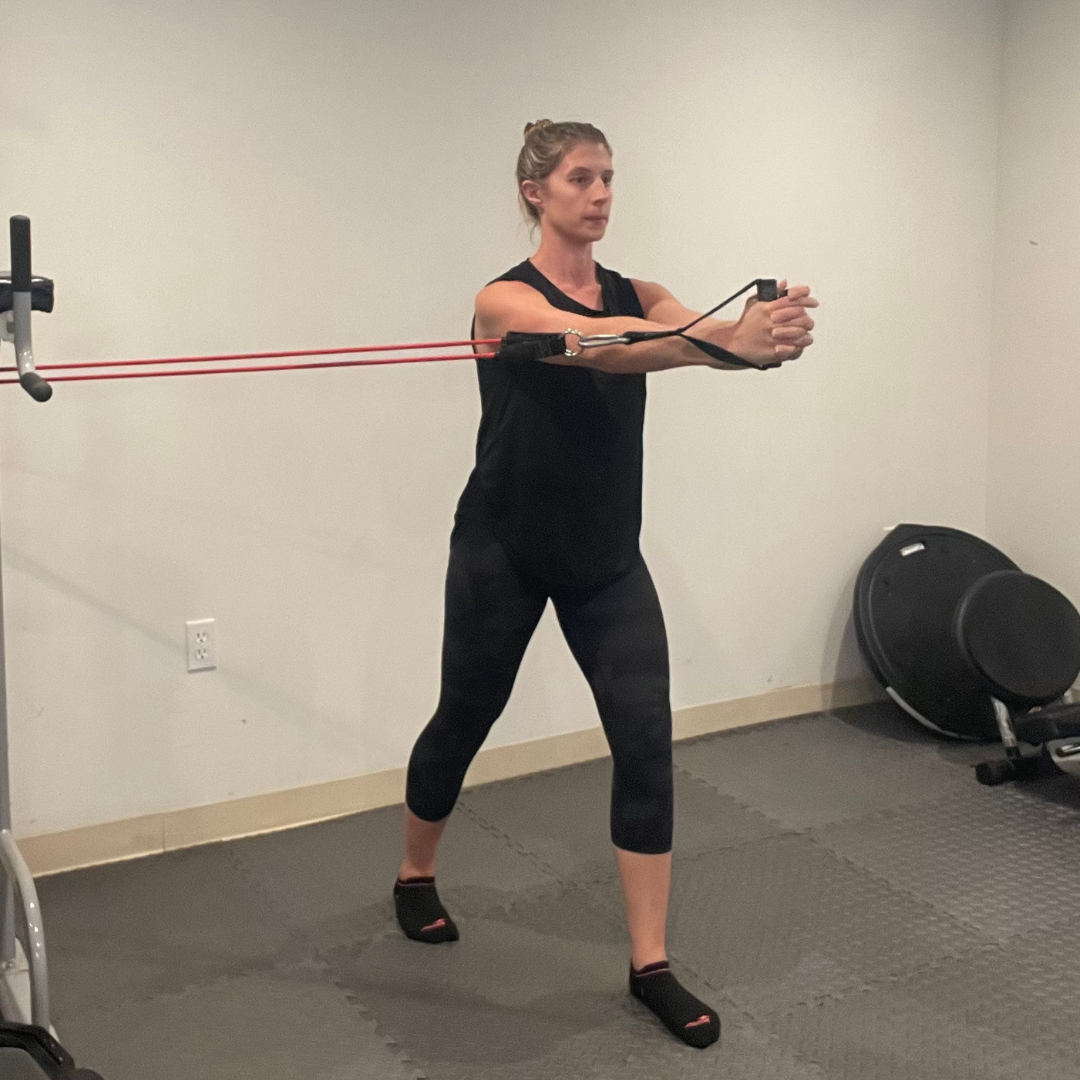
Palloff Press
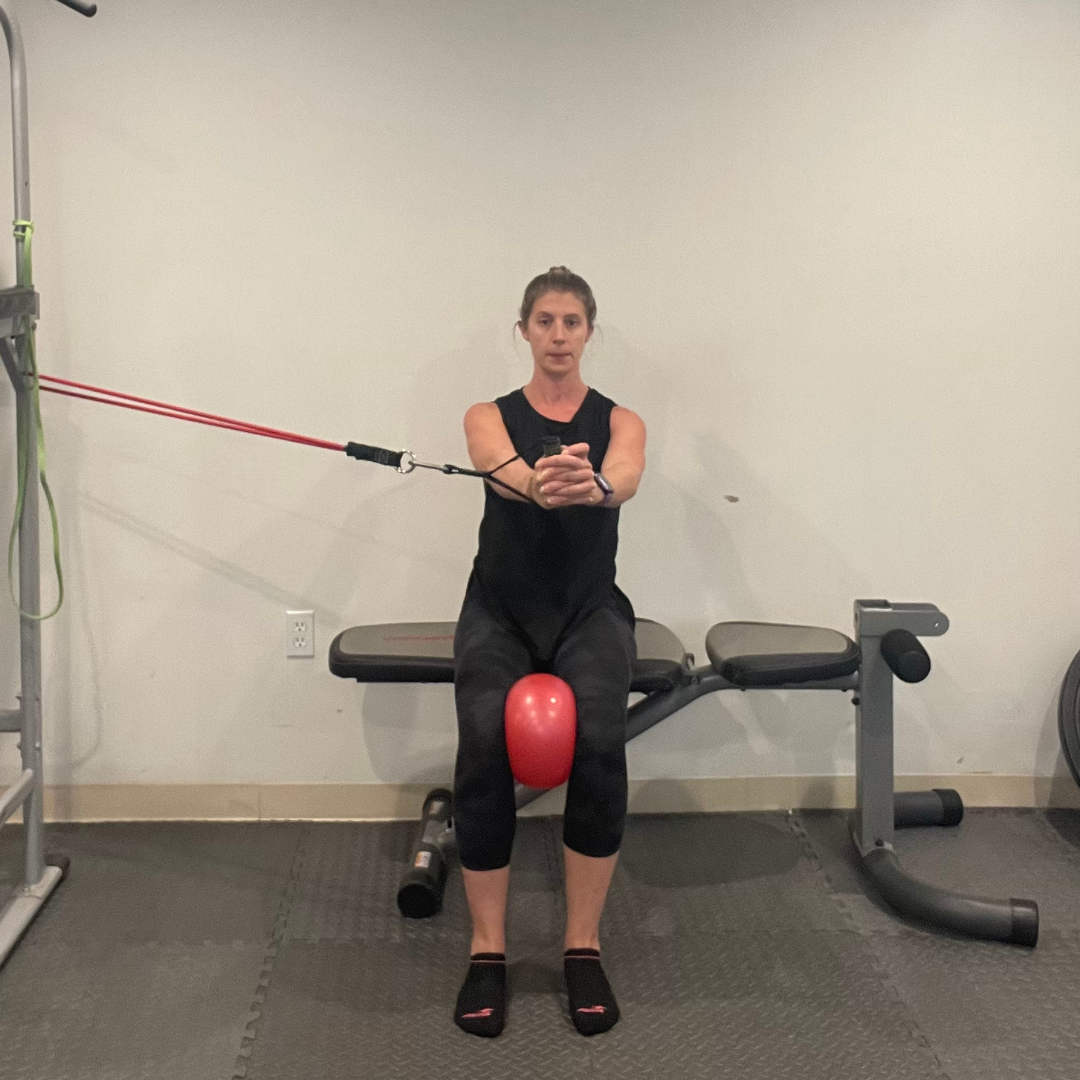
- How: Attach a resistance band to a secure anchor at chest height. Stand sideways to the anchor, feet parallel, holding the band handle with both hands in the middle of your chest. Step to the side to create tension in the band, engage your core, and press the handle straight out in front of you, resisting the band’s pull.
- Options:
- to make it more challenging, stagger your stance with the outer leg in front, knee bent, close leg behind, leg straight, and shift your weight to the outer leg
- if you have pelvic pain, sit or stand and place a yoga block or pilates ball in between your knees and gently squeeze as you press the band out
- Why: The Pallof Press challenges your core, especially the obliques, to stabilize against the band’s pull, reinforcing your sling’s strength and giving your pelvis a solid, stable foundation.
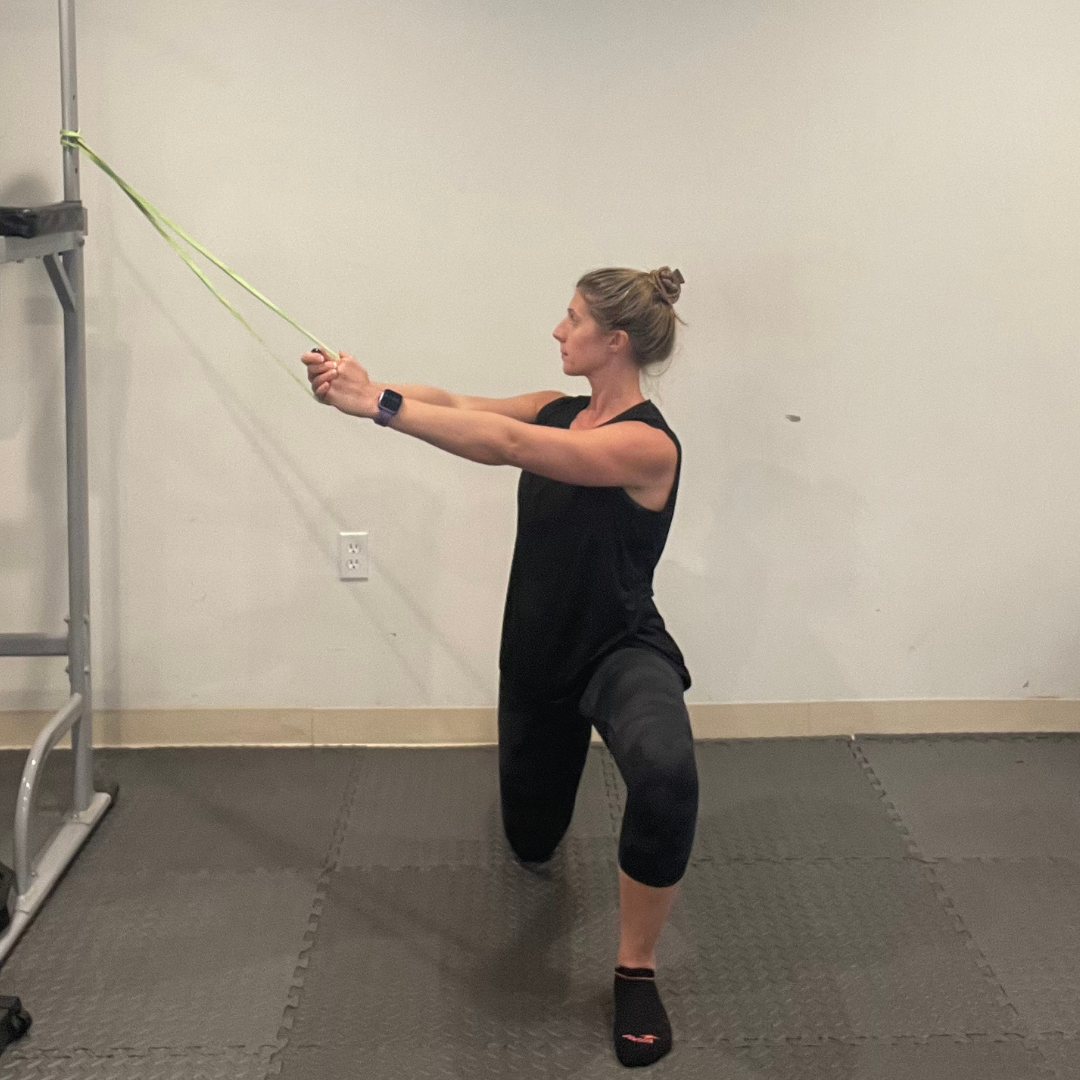
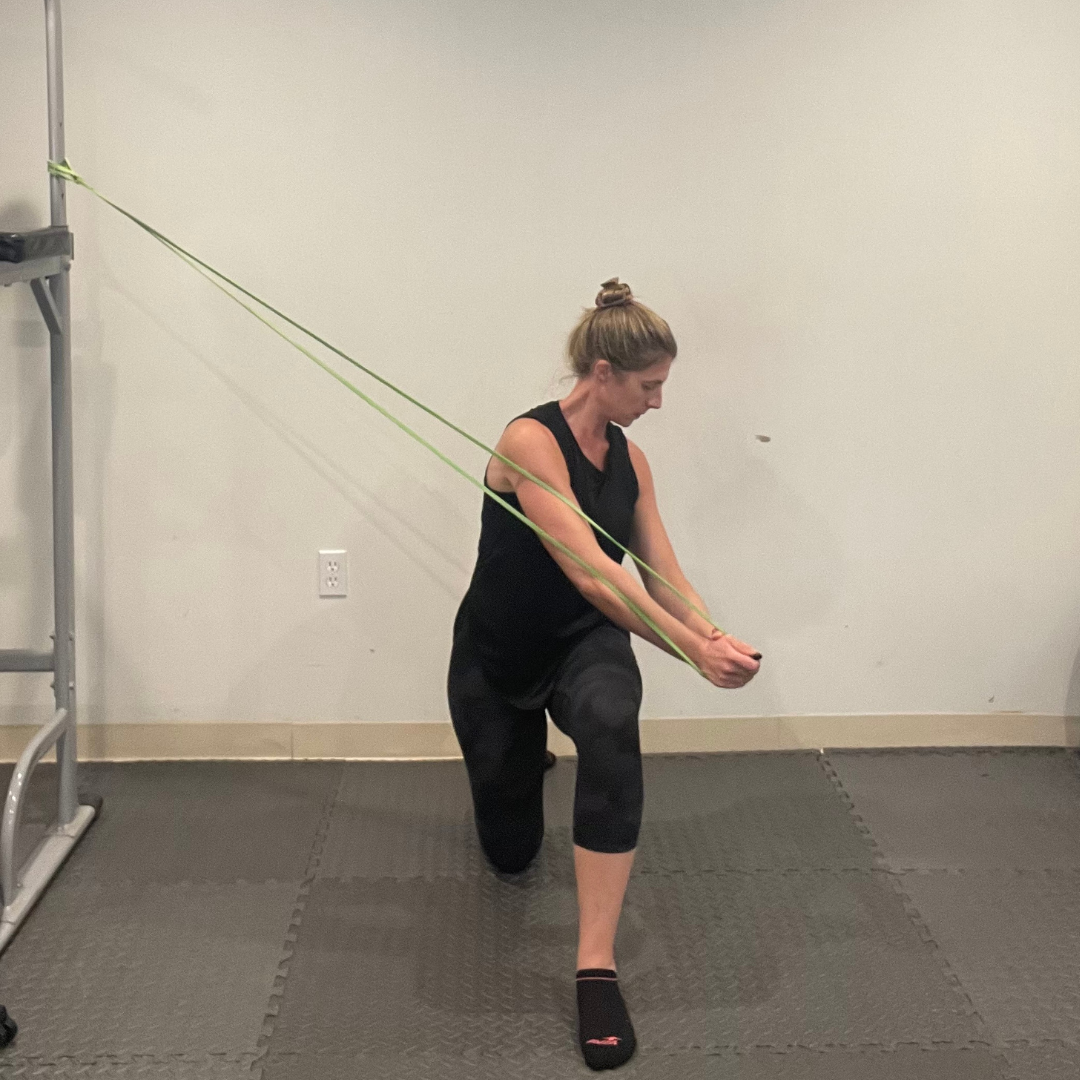
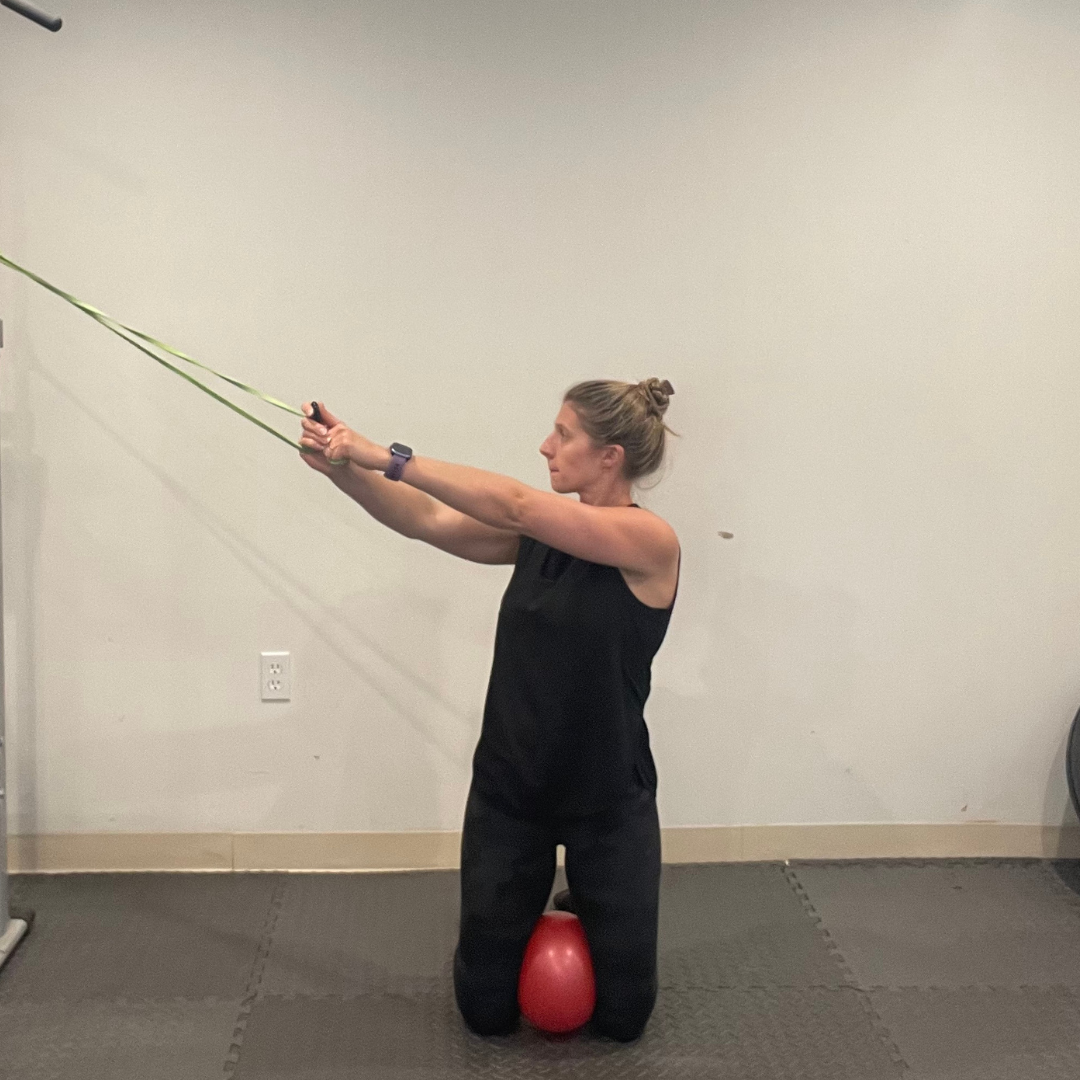
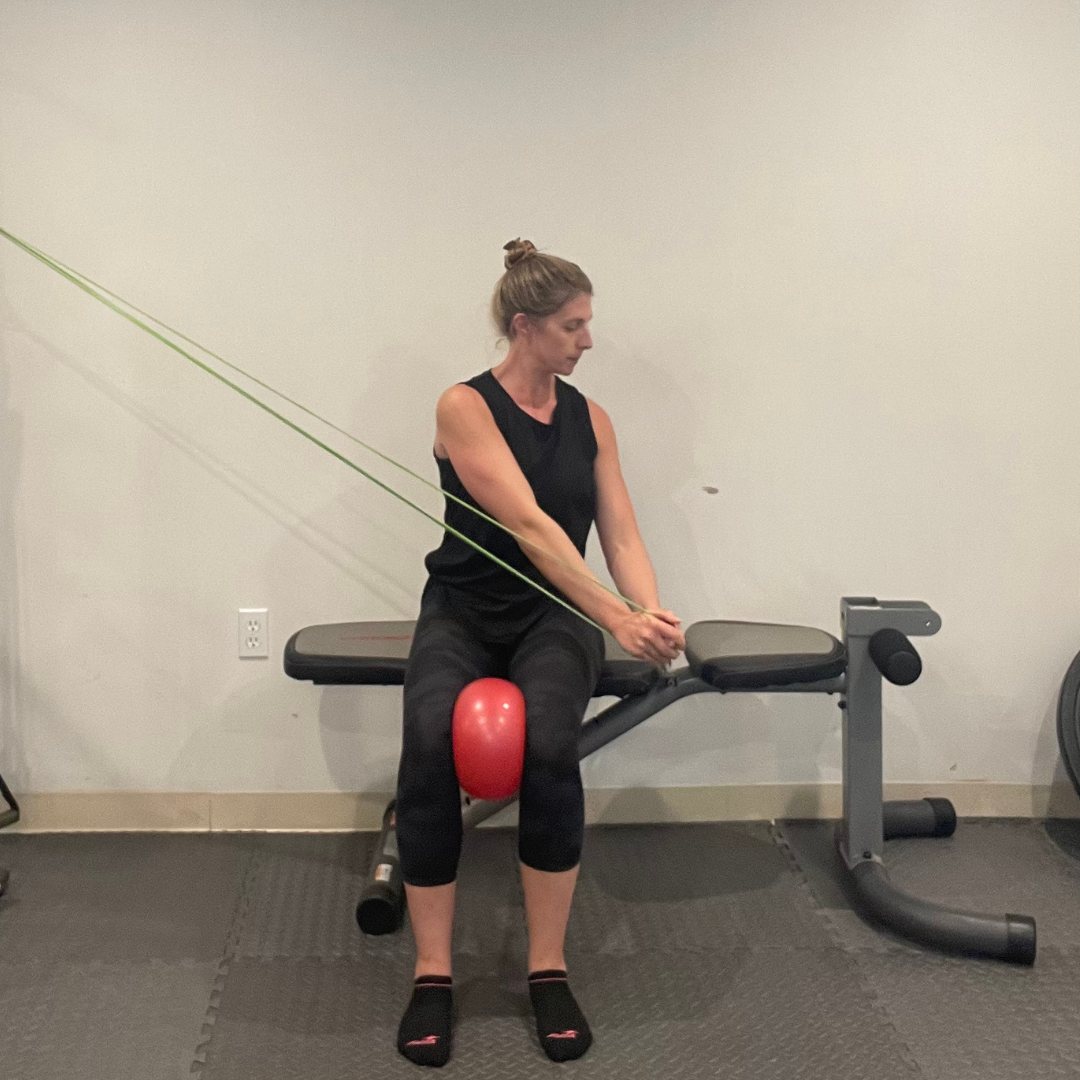
Kneeling Woodchop
- How: attach a resistance band at a high point (above shoulder height if you’re standing). Come into a half kneeling position, with your close leg down behind you, outer leg in front, foot flat on the floor. Both knees should be at 90°. Rotate your torso towards the band and grab it with both hands, arms straight. Exhale, engage your core and pull the band diagonally across your body toward your opposite hip, mimicking a chopping motion. Keep your outer knee either still (don’t leet it bow out) OR knock it in slightly as you twist. Control the movement back to the starting position, and repeat.
- Options:
- For more stability, either sit on a bench OR kneel on both knees, legs parallel…can also add a yoga block or ball between the knees to squeeze as you rotate
- Why: The Woodchop activates your anterior oblique sling, engaging your core, obliques, and inner thighs to create stability. The rotational movement forces your core to stabilize and resist unwanted movement, building strength and support in the pelvis—key for reducing pelvic pain and stabilizing your hips.
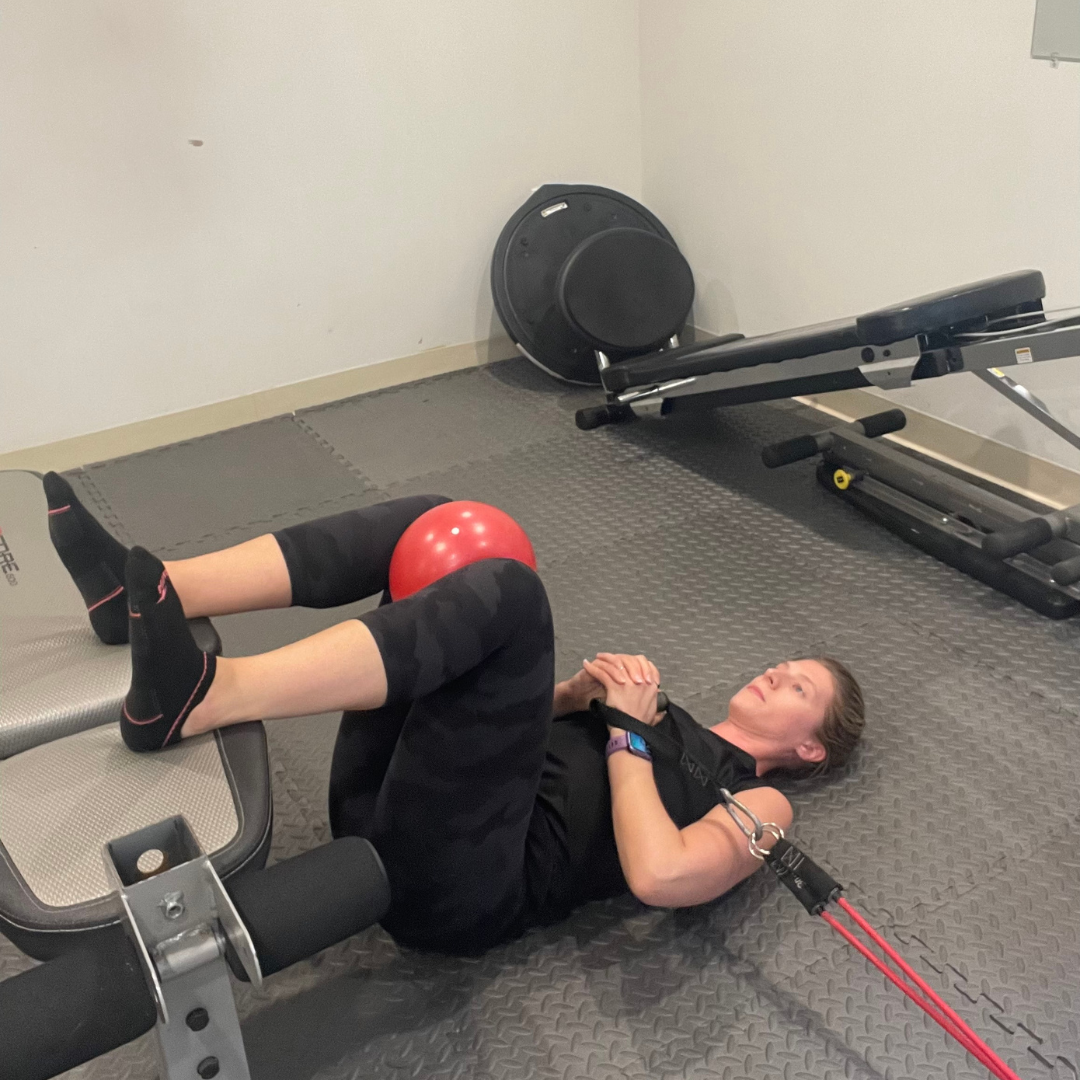
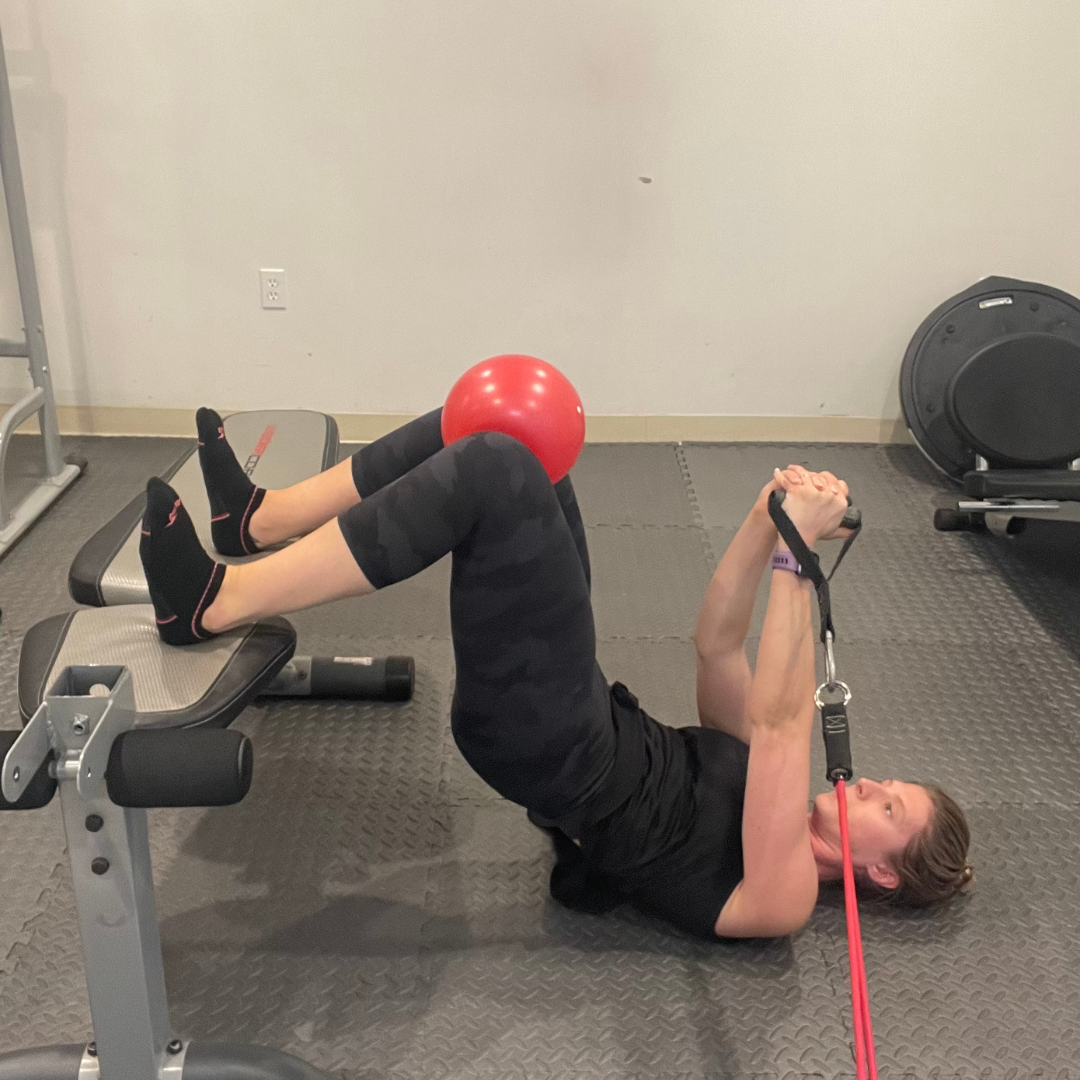
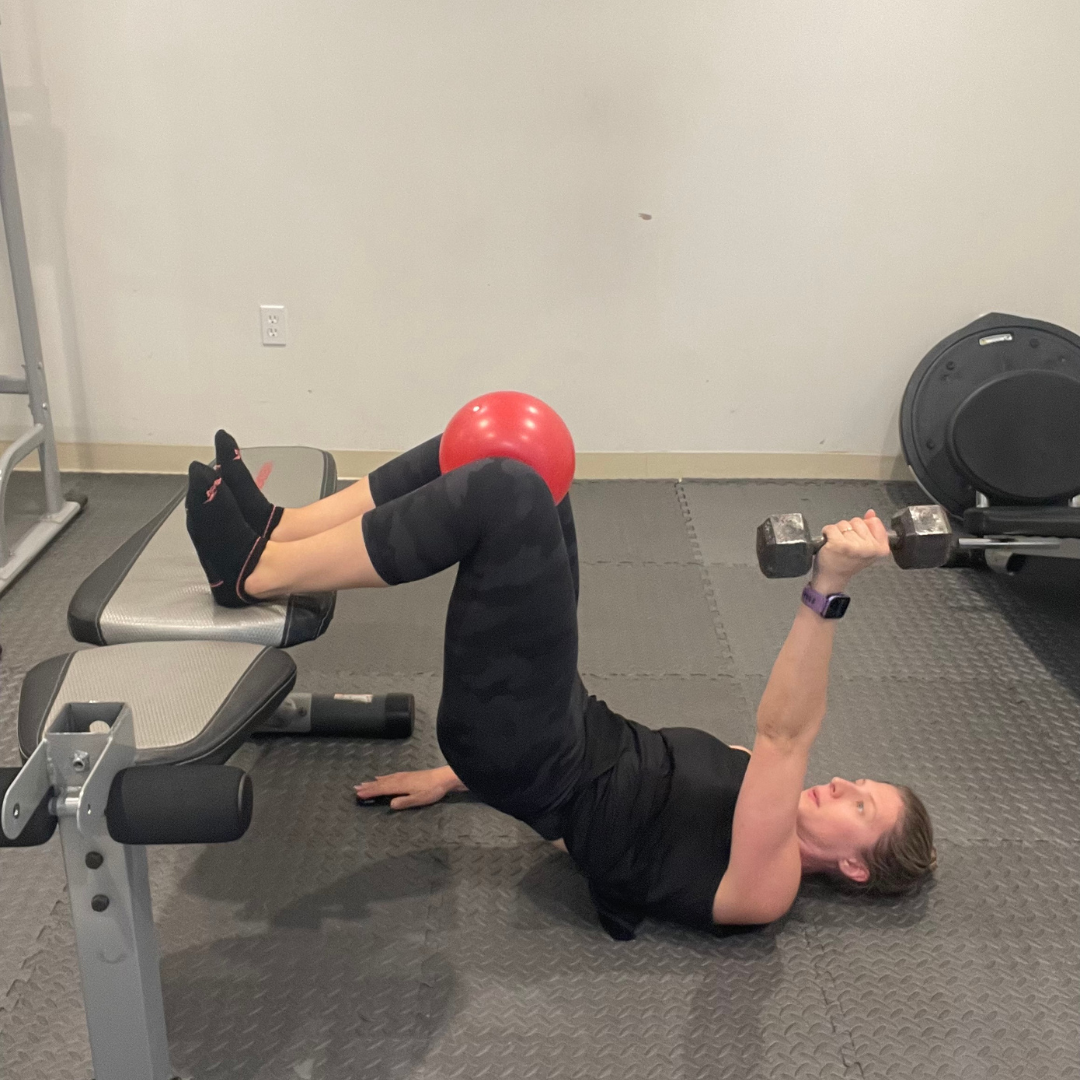
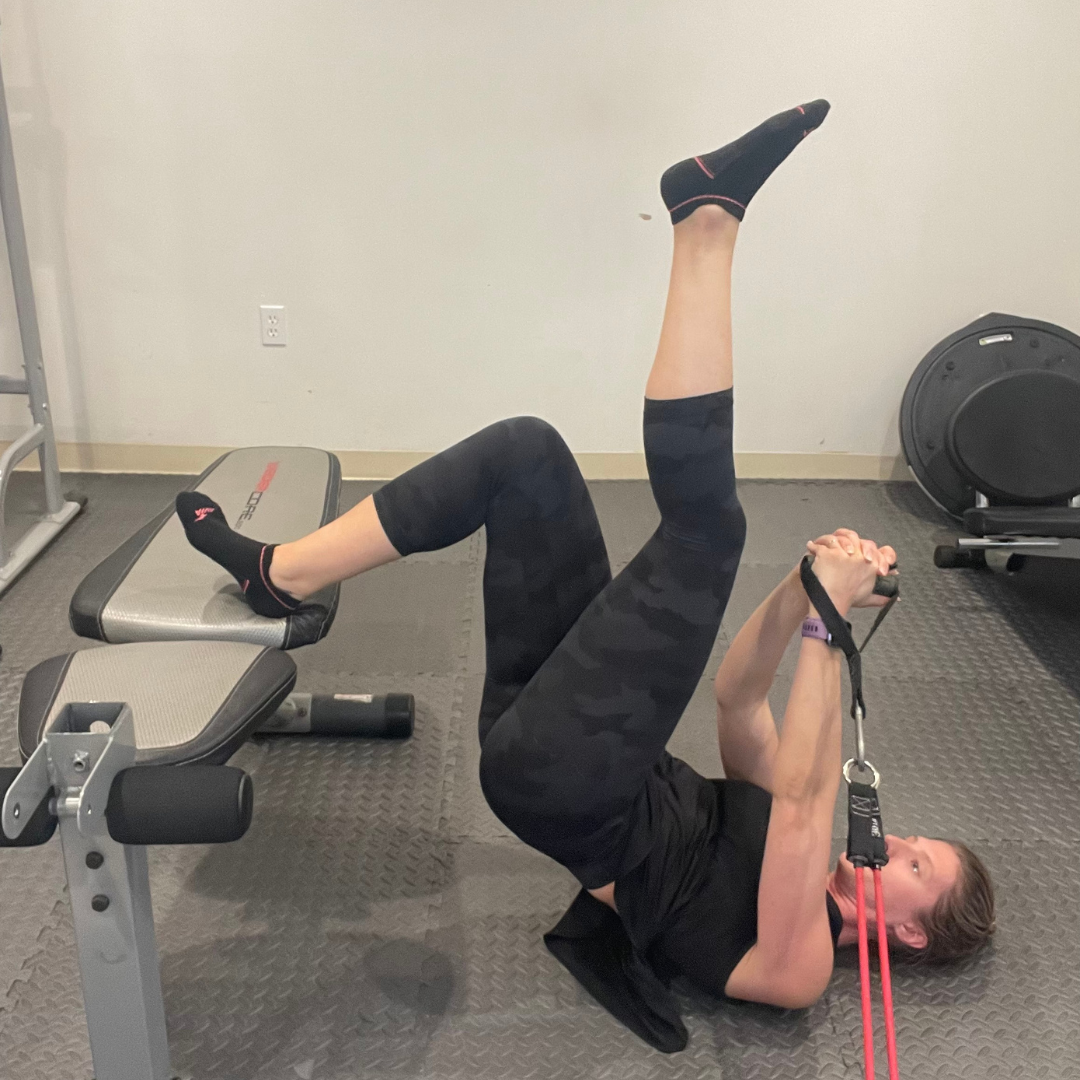
Elevated Thrust with Lateral Resistance
- How: Attach a resistance band at a low point, sideways to where you’ll be lying. Lay on your back with your heels elevated on a workout bench/couch/etc. Scoot in close so your knees are bent at 90°. Place a yoga block or pilates ball between your knees. Grab the resistance band in the center of your chest and press your arms up straight. Keep your arms up, feeling the pull of the band, dig your heels into your surface, tuck your butt under, and gently squeeze the prop. Exhale to lift your hips up and down while keeping your arms straight the whole time.
- Options:
- If you don’t have a band, hold a DB or KB in one arm over your chest
- To make it more challenging, take one foot (opposite side of the band or DB) off the bench and lift and lower your hips using one hamstring
- Why: The resistance band or weight adds an element of instability, forcing your core and obliques to work harder to maintain alignment and control during the movement. This exercise also engages the hamstrings and glutes which play a role in pelvic stability as well.
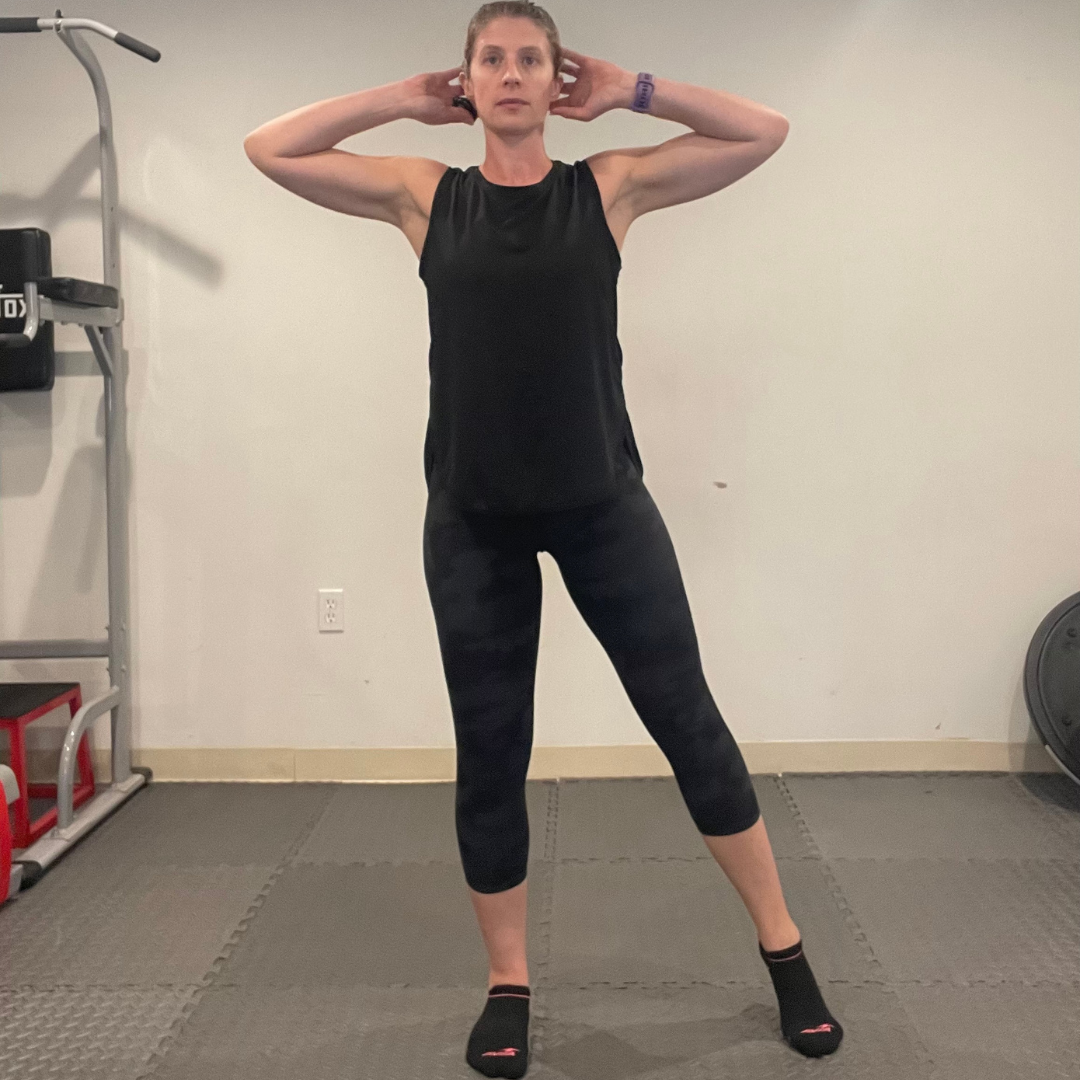
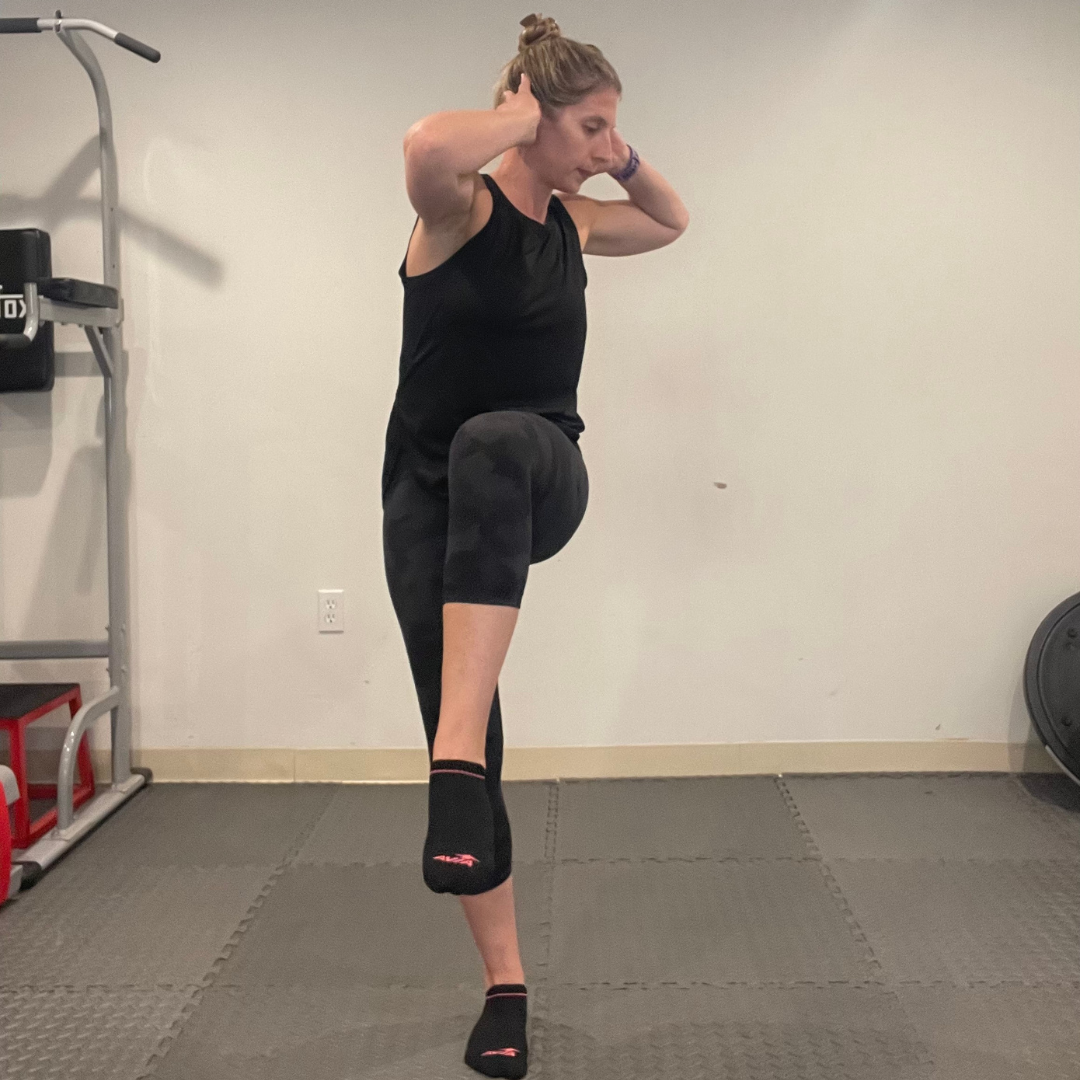
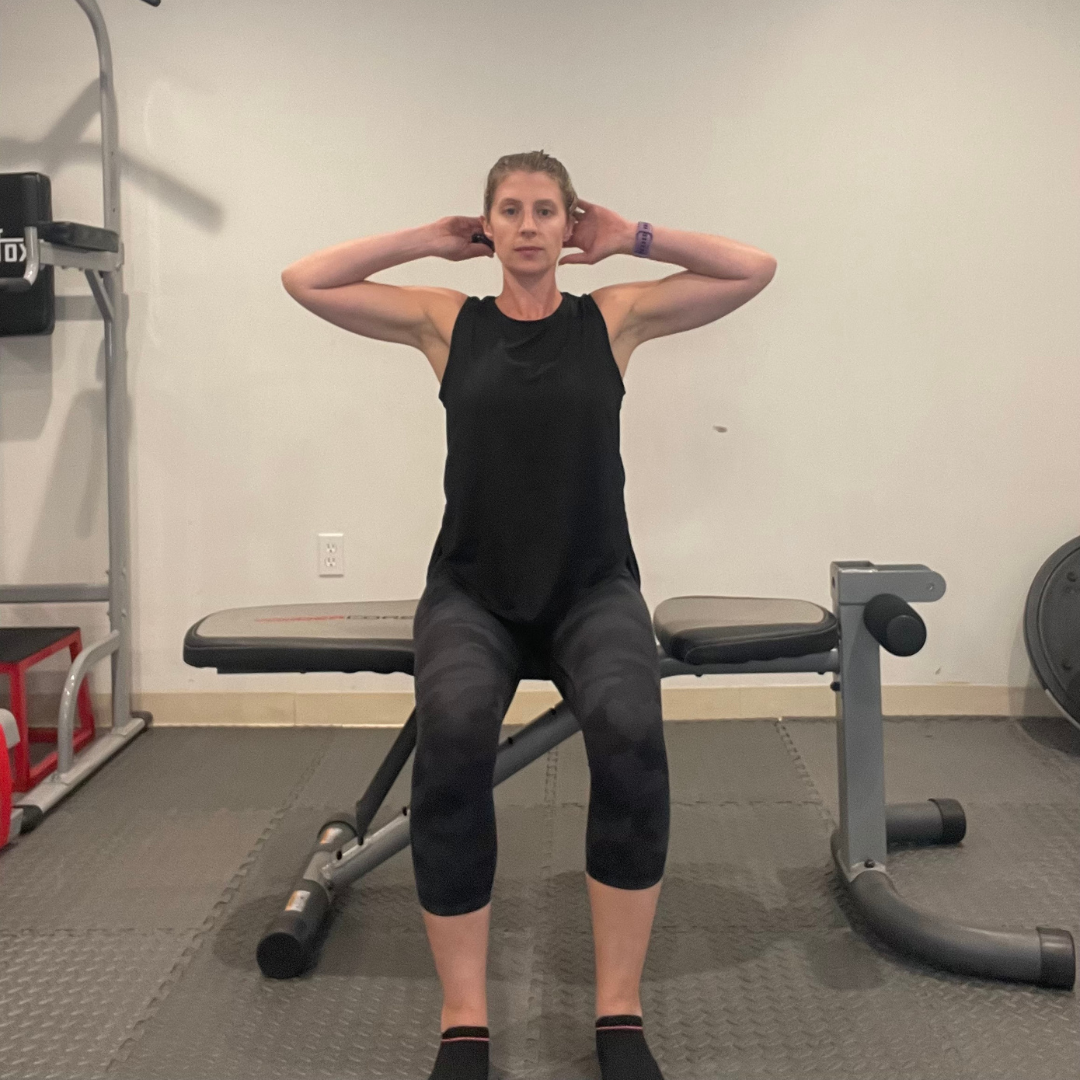
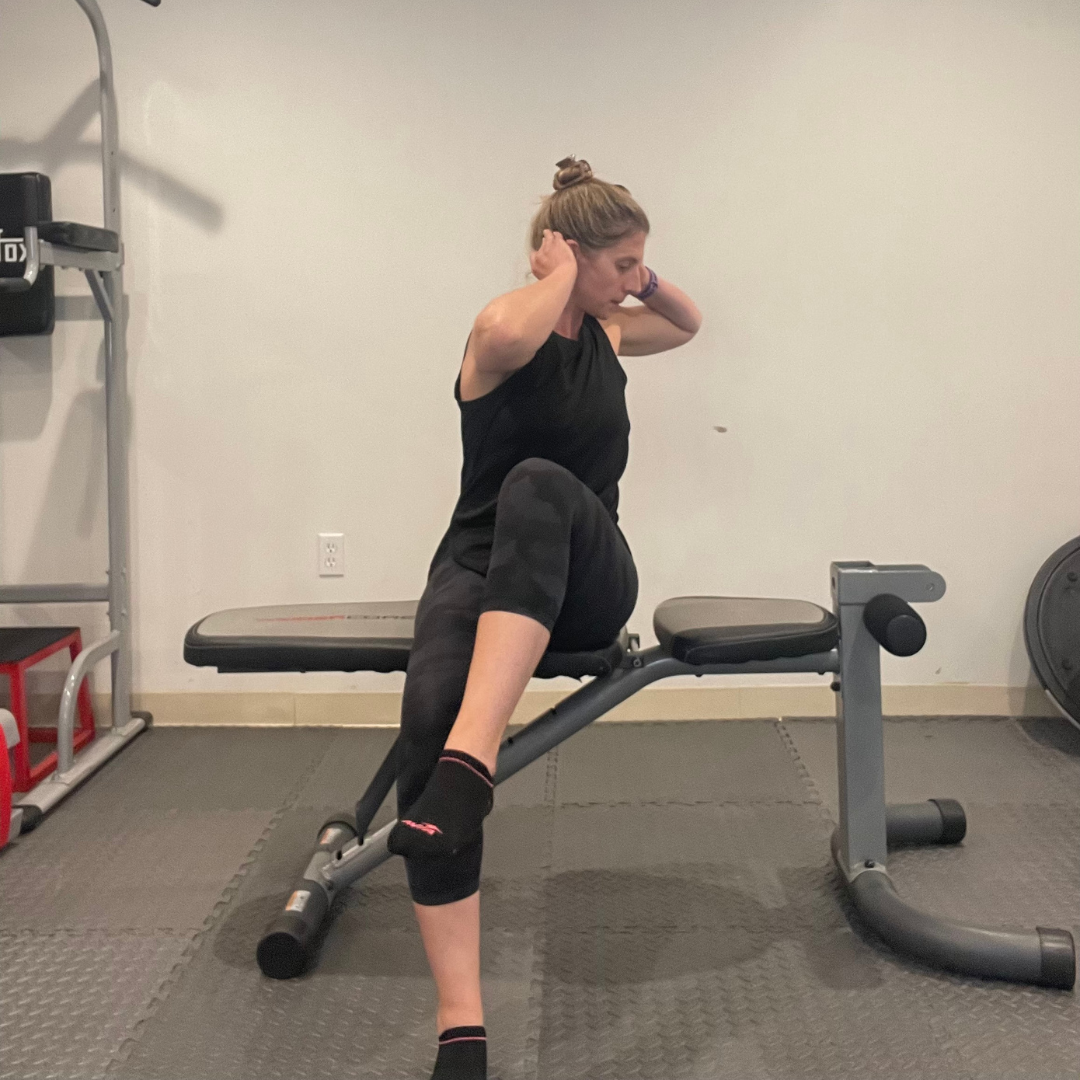
Oblique Crunch with Knee Pull
- How: Stand tall with feet hip-width apart. Place your hands behind your head, engage your core, and lift one knee toward your opposite elbow while rotating your torso toward the knee. Lower and repeat on the other side.
- Option: If you feel too wobbly, sit on the edge of a chair and execute the twist the same way
- Why: This move gets your obliques and inner thighs working together, activating the entire sling while challenging your balance—a double win for pelvic stability.
When you’re carrying extra weight, whether that’s from a growing belly or a babe on your hip, you need stability and support. Without strengthening your AOS, the pelvis can feel wobbly or out of alignment. Cue the backaches, hip pain, and pelvic pressure we’d all rather skip.
Strengthening your AOS is like giving your body a custom support system. Whether you’re pregnant, newly postpartum, or months into mom life, it’s worth investing in a little time with this powerhouse to keep your pelvis and core feeling steady and strong.
*I’d be remiss to say that this is the end-all-be-all cure for pelvic pain. You may have additional postural and/or muscular imbalances going on that need to be addressed. Pain is not normal, so don’t hesitate to reach out below or find a local Women’s Health Physical Therapist to help you!
Want to learn more? Click below to schedule a free call with me!