

Worried about your precious babe getting into the optimal position for birth?
Then you may have heard about the Forward Leaning Inversion, a technique used to create extra space in the bottom of your uterus, giving your baby more room to snuggle into a more ideal position for birth.
Today, I’m going to give you everything you need to know about performing the Forward Leaning Inversion during your pregnancy, and some extra benefits besides getting your babe locked and loaded in position.
What is a Forward Leaning Inversion?
In simple terms, a Forward Leaning Inversion is a position you can do during pregnancy (and labor – but that’s for another day) that creates space in your uterus for your baby to move into a better position for birth.
The Forward Leaning Inversion also puts some slack in your uterine ligaments giving you a little relief while giving your baby’s head more space to move into.
This technique or position can also provide you with some back and hip relief as it takes pressure off your spine, muscles, tendons, and ligaments. Thank you, gravity!
Depending on the status of your cervix, it may help it become less tipped or tight, allowing labor to progress a bit smoother.
Want to get the most out of birth prep techniques like the Forward Leaning Inversion (FLI)? Download Four Daily Practices to Elevate Your Pregnancy for free today!
Why is the Forward Leaning Inversion Important for Pregnant Women?
Besides all the delicious benefits listed above, the FLI is mostly widely known for helping your baby reposition.
You may have heard the term “sunny side up,” and no, I’m not talking about runny eggs, which you may or may not be missing terribly right now, so apologies if you are.
A “sunny side up” or posterior baby (shown on the right) is head-down, facing your belly button, with the back of their head towards your spine.
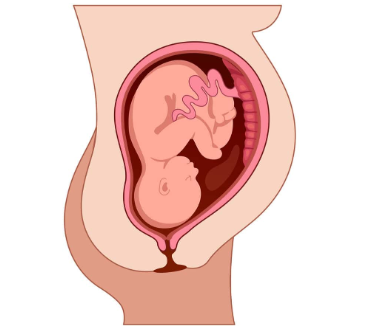
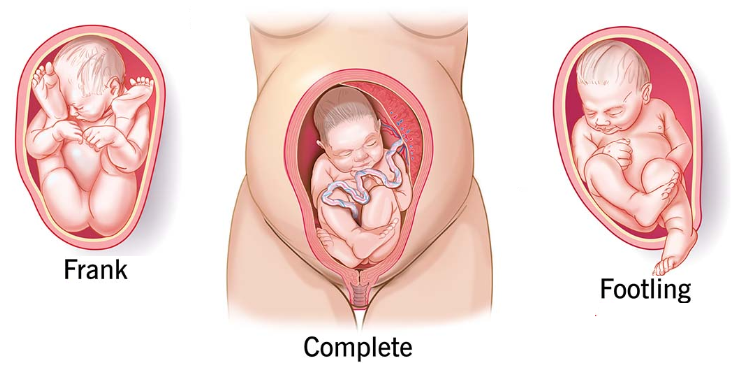
You may have also heard the term “breech,” which refers to a baby who has their little booty at the bottom of your uterus instead of their head. There are three types of breech positions:
- Frank Breech: baby’s butt is down with their legs extended up towards their head
- Complete Breech: baby’s butt is down, but their knees are bent with their feet near their butt
- Footling Breech: one or both of baby’s feet are positioned downward, ready to come out first
A baby may also be in a Transverse position, lying horizontally across your uterus instead of vertically. Their back may be:
- Down, with their face facing your cervix
- Sideways, with one shoulder pointing towards your cervix
- Up, with their hands and facing facing your cervix
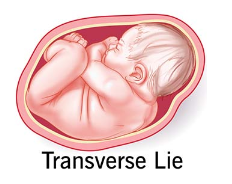
Each of these positions is considered less “ideal” for labor and a vaginal delivery as they tend to cause increased back pain and back labor, and increased rate of interventions, including cesarean delivery. Some providers are comfortable and skilled at delivering babies in these positions; if you have a history of posterior, breech, or transverse babies and want a vaginal delivery, make sure you find a provider who is confident in delivering your baby.
It’s important to note that some babies may be breech or transverse earlier in pregnancy but naturally rotate into a head-down position as their guess date approaches. If your baby is in one of these positions, the FLI may help “turn” your baby into an ideal position.
What’s the “ideal” position for babies?
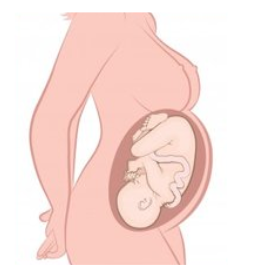
The “ideal” position for your baby to be born vaginally is Anterior, with the back of their head towards your belly, facing your spine. Anterior is considered preferable because your baby’s head will most easily engage into your pelvis and with your cervix, creating more effective contractions. This position also tends to put less pressure on your spine and perineum and is associated with a lesser risk of certain complications, such as shoulder dystocia.
The FLI creates more space in your uterus for your baby to wiggle into an Anterior position, especially when practiced daily later in your pregnancy. More on that to come. 😉
When you practice the FLI, you’re also providing yourself with some relief. This position helps take the weight and pressure of your growing belly off of your uterine ligaments, while stretching and elongating your compressed spine.
On top of that, the Inversion may release tight tendons and ligaments in your pelvis. When these tissues get tight or twisted they can cause a misalignment of your pelvis and uterus, potentially making it more difficult for your baby to move smoothly through your pelvis during birth. The Inversion can help realign you.
So yeah, there are a lot of benefits to a FLI. So how the heck do you do it? That’s up next.
How to Safely Perform a Forward Leaning Inversion During Pregnancy
First, please do not perform this if you have any of the following contraindications for going upside down:
- Hypertension
- Glaucoma
- Risk of stroke
- Uterine pain
- High amniotic fluid
- Sinus infection or congestion
- Heartburn
- Suspected or known placental problem
In addition, please speak with your provider if you are nervous or unsure about performing this technique even if you do not have any of the contraindications listed above. Safety, security, comfort, and confidence always!
Okay, now that that’s out of the way, let’s get into it.
- Kneel on the edge of a couch, chair, stair, box – anything sturdy and low to the ground. The steeper your angle the harder, so start low, especially if you’re late in your third trimester!
- Hinge at your hips to push your butt back and bring your torso forward and down to place your hands on the floor.
- Walk your hands forward to lower yourself onto your forearms, one at a time.
- Position your elbows wide and hands narrow, keeping your butt up in the air.
- Press through your shoulders to make sure you’re not “sinking” into them and gently tuck your chin (your head should not be resting on the floor).
- Keeping your spine straight (no arching!) let your belly hang heavvvyyyyy and release tension in your back, hips, and belly.
- Stay here breathing deeply in through your nose and out through your mouth for about 30 seconds or three long breaths.


Getting out of this position can be tricky, so please have either a human spotter or something you can use to help press yourself back up (box, another chair, etc.)
- On your last exhale, slowly press yourself back up to your hands and pause here, taking a breath or two.
- With assistance from your person or prop, lift yourself back up to the tall kneeling position you started in, then sit back onto your heels and pause here, taking a breath or two.
- Swing your feet to the side to get up.
Some Notes!
- You may experience a head rush or throbbing head the first couple of attempts; your body is trying to “warn” you against a potentially harmful new movement or activity. {Our bodies are so smart.} If this happens, do it for less time until your body gets used to it and understands you are doing it on purpose.
- While similar in position, a Downward Facing Dog doesn’t fully allow your uterus to hang so you won’t get all of the same benefits.
- If your baby is already in a good position, this will not take them out of it; you can continue to practice it for the other benefits!
Modifications:
These options are easier to get in and out of, especially if you do not have someone or something to help you get back up. Just as with the Down Dog note, they may not allow your uterus to relax as fully, but are still beneficial.
Knee to Chest/Puppy Pose:
- Bring your knees as wide as you need to for your belly.
- Come onto your forearms resting the side of your face or forehead on the floor.
- You want your thighs as vertical as possible, and your back flat.
- Take three long, deep breaths.

Open Knee to Chest:
- This pose is similar to Knee to Chest Pose, except your forearms are much further away, making almost a triangle shape with your thighs, chest, and floor.
- Take three long, deep breaths.

Dolphin Pose:
- Dolphin Pose is a variation of Downward Facing Dog that takes pressure off your wrists.
- With a soft bend in your knees and elbows on the ground, exhale and slowly lift your butt up in the air
- Take three long, deep breaths.

How Often and When Should You Do the Forward Leaning Inversion?
Generally, once a day is enough, starting late in your second trimester, or around 30 weeks. As a reminder, your baby doesn’t have to be in a less-than-optimal position to do the FLI – there are other benefits specifically for your body! And it won’t dislodge them if they’re snuggled up in their anterior position.
If your baby is breech, you can do this technique more than once per day (just speak with your provider as per usual). And remember, breech babies can sometimes naturally turn on their own!
I hope you feel confident and comfortable giving the Forward Leaning Inversion a whirl…but make it a slow whirl lol.
You’ll potentially help reposition your baby and provide your back, uterus, and surrounding areas with some much-needed relief.
Ready to put the FLI into practice?
Grab a copy of Four Daily Practices to Elevate Your Pregnancy, which includes the FLI, for free!
