
Did Elle Woods have it right?
Do you even know what I’m talking about? Please say yes or I’m going to feel old 😩 {cries in elder millennial}

Okay, so what I’m talking about today isn’t exaccctttlllyyy like that, but it’s going to feel oh so good. Let’s explore why getting bendy is not just a fun way to move, but an essential part of keeping your mom-back happy.
Enter: Thoracic Mobility
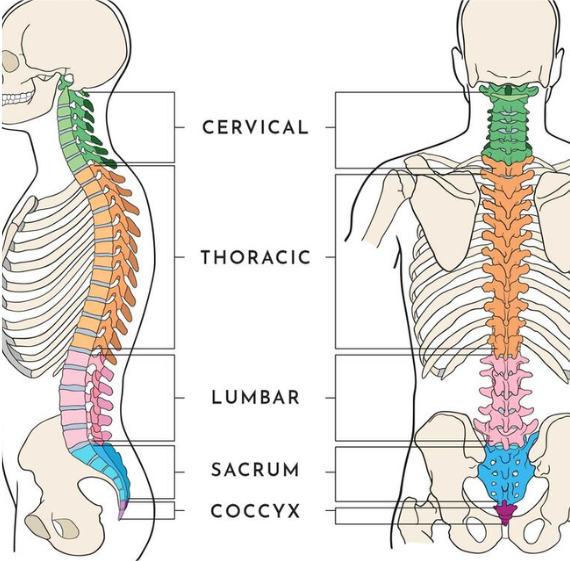
What is your Thoracic Spine?
It’s the part of your spine between your neck and lower back. Think just under your bra line to the base of your neck.
What happens to your T-Spine during pregnancy & postpartum?
- It takes on extra pressure as your head and shoulders shift forward and your chest shortens
- It rounds, putting more pressure on your abdomen and pelvic floor
- It stiffens, which causes your Cervical (neck) and Lumbar (lower back) spine move more to compensate, which tends to increase pain on top of everything else 🙃
What will Thoracic Mobility do for you? Two words: A LOT
✔️Improves Breathing: Thoracic mobility helps expand the ribcage, allowing better lung capacity, which is especially important as the baby grows and compresses organs during pregnancy.
✔️Eases Upper Back Pain: Mobility in the thoracic spine can relieve tension in the upper back and shoulders, common discomfort areas for pregnant and postpartum moms.
✔️Supports Posture: Keeping the thoracic spine mobile helps maintain good posture, counteracting the forward hunch that often develops as the belly grows and nursing begins.
✔️Relieves Rib Pain: Improved thoracic mobility can reduce rib and chest pain, which is common in the later stages of pregnancy due to pressure from the growing uterus.
✔️Improves Core Function: Thoracic mobility is essential for overall core engagement, which is crucial for both carrying the baby and postpartum recovery, including diastasis recti healing.
✔️Prevents Compensatory Movement: A stiff thoracic spine can lead to overuse of the lower back, neck, and shoulders, which can cause additional strain or injury during pregnancy and postpartum.
✔️Aids in Labor Positions: Having a mobile thoracic spine gives more freedom of movement during labor, allowing you to adopt various positions that could ease contractions and support delivery.
✔️Enhances Milk Supply: Good thoracic mobility can support optimal breastfeeding posture, which improves latch and milk flow by avoiding rounded shoulders and chest compression.
✔️Promotes Healing: After birth, thoracic mobility exercises help restore overall spine alignment, which can speed recovery and reduce the aches and pains from carrying and nursing the baby.
✔️Boosts Energy Levels: Improved thoracic mobility helps to increase circulation and energy flow, which can combat fatigue—a lifesaver for postpartum moms needing to stay energized for newborn care.

Sold yet? Thought so. Let’s practice!!
Your T-Spine can move in three ways:
- Flexion/Extension (forward folding and arching back)
- Lateral Flexion (side bending)
- Rotation (twisting)
It’s important to move in all 3 to support the health of your spine. Follow along with me in this quick video 👇🏽👇🏽 to learn the simplest way to mobilize your T-Spine. All you need is something to sit on!
Thoracic mobility benefits range from comfort during pregnancy to aiding in postpartum recovery, making it a must for moms!
Pregnant and want more Thoracic mobility goodness?
Grab a copy of Four Daily Practices to Elevate Your Pregnancy for FREE!

Almost or newly postpartum?
Check out Renewal After Birth, a 42-day guided recovery program that will have your whole body feeling amazing!
Click here to check it out! 🏃🏻♀️🏃🏻♀️

Almost or newly postpartum?
Check out Renewal After Birth, a 42-day guided recovery program that will have your whole body feeling amazing!
Click here to check it out! 🏃🏻♀️🏃🏻♀️