

How and Why to Modify Upper Body Workouts During Pregnancy
When you think about modifying your workouts during pregnancy, you probably think about core first, legs second, and then maybe upper body?
We know staying strong up top is hugely important—especially during pregnancy and postpartum. Upper body strength helps you:
-
Push more effectively during labor
-
Hold yourself upright in birth positions
-
Carry your baby, diaper bags, and stroller frames postpartum
-
Support your core and pelvic floor in ways most people don’t even realize
The catch? Upper body lifts can sneakily add pressure to your core and pelvic floor—especially when you’re pulling, pressing, or reaching overhead.
The good news: with a few smart tweaks, you can stay strong, avoid discomfort, and support your body through every trimester.
Let’s break down why upper body modifications matter and how to tweak your favorite movements for each stage of pregnancy.
Why Modify Upper Body Exercises During Pregnancy?
As your belly grows and your posture shifts, it becomes harder to maintain good alignment, minimize strain on your abdomen, and properly manage pressure—especially during lifts like rows, presses, and pulldowns.
Here’s what might be happening:
- Your ribs are flaring or your back is arching during presses or pulldowns
- Lying flat makes you nauseous or lightheaded (hello heartburn)
- It’s difficult getting into a lying flat position (especially in second and third trimester)
- You’re straining your abdomen during push-ups or rows
- You’re feeling unstable or unsupported during certain movements
- Changes in energy, balance, and core function that affect stability are making you frustrated
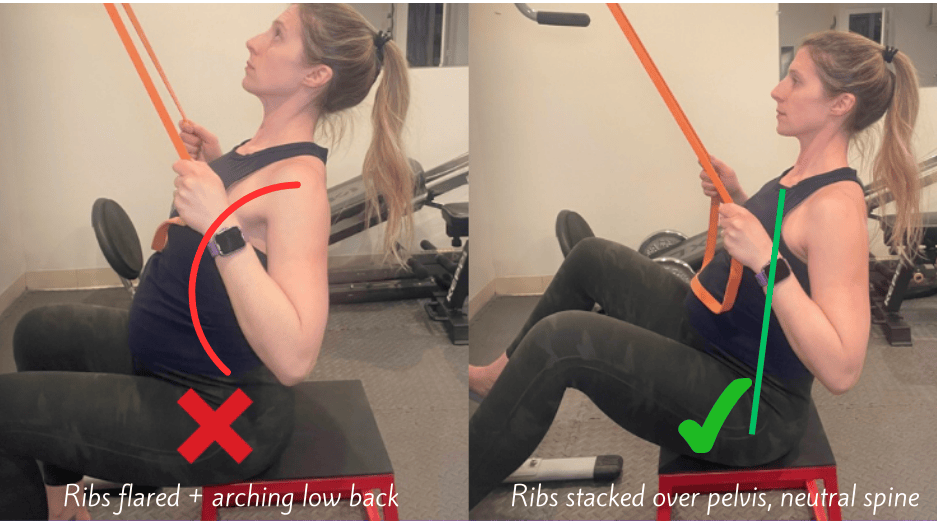
Proper alignment helps reduce pressure and protect your core during pressing and pulling movements.
If your ribs flare, your back arches, or you’re lying flat without support you’re likely stretching your abdominal wall and putting pressure on your linea alba, which can lead to doming or coning and worsening Diastasis Recti, especially if you’re not coordinating your breath and posture.
With small modifications and tweaks you can:
✅ Reduce strain on your linea alba (the connective tissue down your midline)
✅ Improve rib-to-pelvis alignment
✅ Protect your core and pelvic floor
✅ Keep feeling strong, stable, and capable
💡 Worried about how to modify as your belly grows? My free Pregnancy Taper & Postpartum Rebuild Roadmap walks you through how to modify and scale movements as your body changes.
How Upper Body Lifts Can Strain Your Core
Many upper body pushing and pulling positions actually create more pressure than you realize. As your belly grows, these moves can strain your core and contribute to doming, coning, or pain. The most common exercises I see strain in the core are chest press, chest fly, pullover, shoulder press, pull down, and row.
Here’s why:
🔹 Lying flat (like in a press, pullover, or chest fly) can stretch your abdominal wall if your feet can’t touch the ground and you arch your back, but where I see the biggest strain is getting in and out of the lying flat position.
🔹 Overhead movements (particularly shoulder press or pullover) often causes your ribs to flare and your low back to arch—aka you’re pulling on your core in every direction—top to bottom and side to side—making it harder to maintain tension.

🔹 In a seated pulldown, the tendency is to press the ribs and chest forward as the bar/handles come down, which compresses the lower back and strains the core.
🔹 Any time the ribcage opens or lifts away from your pelvis, you lose your deep core connection—and that can increase pressure on your linea alba and pelvic floor.
The fix? Stay mindful of rib-hip connection throughout upper body exercises. That doesn’t mean sucking in or bracing—it means keeping your ribs stacked over your pelvis and engaging your breath as your secret weapon. It may also mean limiting your range of motion and/or choosing a different variation or modification of the same exercise.
💡 Want to learn how to fix alignment issues during your workouts with smart exercise swaps? My Still Lifting, Just Shifting E-book breaks down upper and lower body modifications and variations for when traditional lifts become uncomfortable or inaccessible.
Now that you know what to look for, let’s dive into the smart adjustments you can make—trimester by trimester—to keep your core supported and your strength sessions feeling good.
First Trimester: Adjust for Nausea, Fatigue, and Dizziness
In early pregnancy, symptoms like nausea and lightheadedness can make traditional positions (like lying flat) super uncomfortable. And even if your workouts haven’t technically changed much yet, your energy probably has. So this trimester is all about minor tweaks and listening to your body (which includes skipping your workout all together if that’s what you need!)
Modifications to Try:
- Incline or seated presses instead of lying flat to minimize nausea and dizziness
- Upright cable or banded rows instead of bent-over rows to combat nausea and heartburn
- Shorter workouts with longer rest, i.e. 2 sets of 10 reps instead of 3 sets of 12 reps, with a longer rest time in between each set
- Decrease your weight load to help minimize overall demand on your body
- Focus on breath coordination and gentle activation over intensity
Check out this IG reel that talks more about working out during the first trimester!
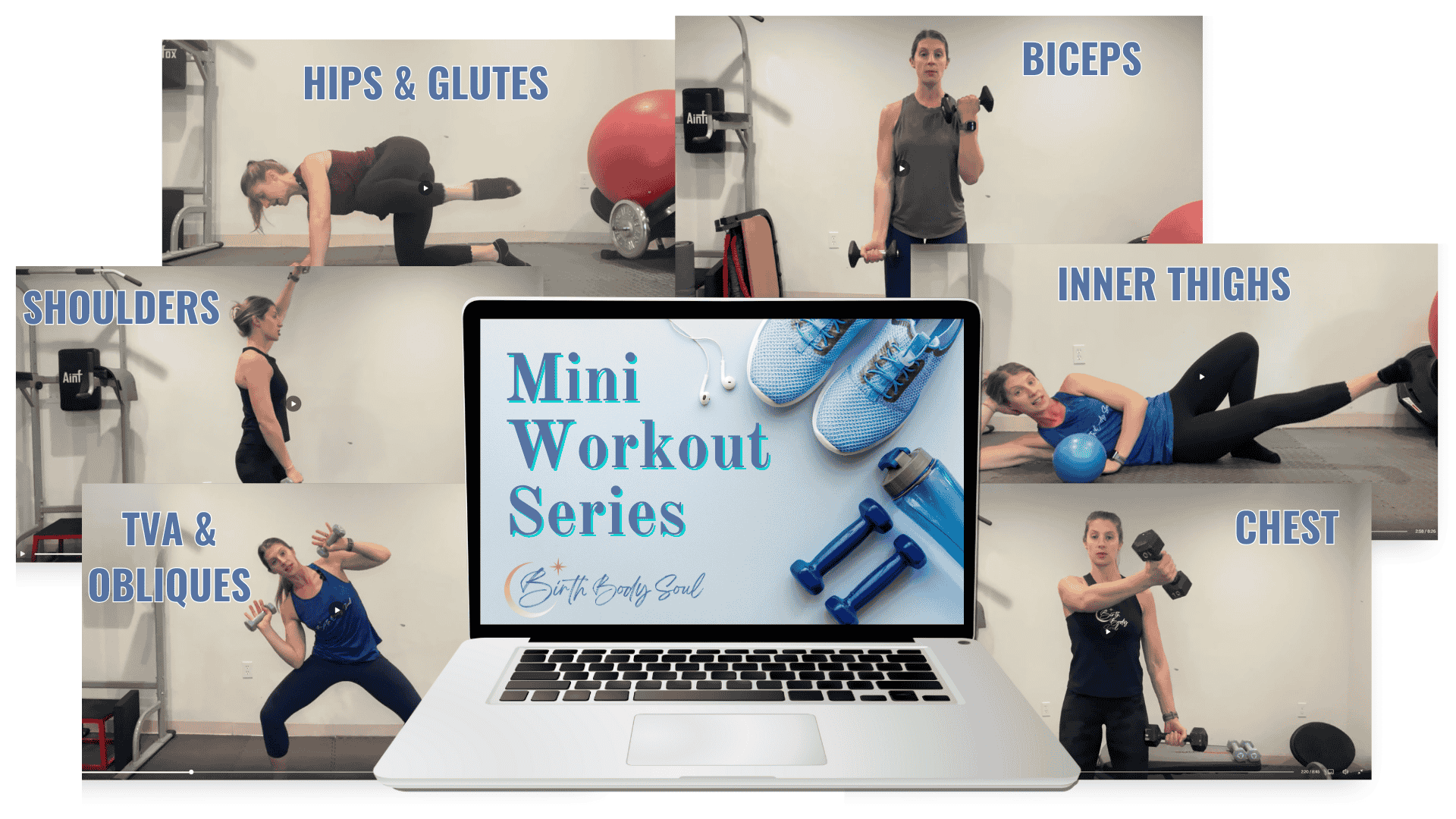
✨ Need simple, short workouts that don’t drain your energy? Download my Free Mini Workout Series— you get 6 short sessions, each under 10 minutes! Trust me, you’ll feel the burn 🔥
Second Trimester: Adjust for Core Pressure and Alignment
This is usually when your belly starts to show—and you’ll likely notice shifts in your alignment and movement mechanics. As your belly grows, you may find movements are starting to feel unstable or awkward. Prioritize form over reps and stay connected to your core.
Modifications to Try:
- Incline bench press (or floor press) instead of flat bench
- Half-kneeling or tall-kneeling shoulder press for more alignment and core control than standing or seated shoulder press
- Rows from a supported stance (seated, kneeling on a bench, or using cables/bands) as opposed to a bent over position
- Prioritize rib-over-pelvis alignment to avoid rib flare or arching as you row, pulldown, or press
🌟 This is the trimester where things feel different, and adjusting your workouts helps you keep feeling strong—mentally and physically. No need to push through what feels off. Adjust and keep progressing.

Swap flat for incline or seated presses to support rib-pelvis alignment and protect your core.
💡 Want more safe upper body swaps (like overhead press, pull-ups, push-ups)? My Still Lifting, Just Shifting E-Book gives you upper and lower body strength modifications and variations across all three trimesters—so you’re never stuck guessing and can keep lifting safely, with confidence.
Third Trimester: Prioritize Stability and Birth Prep
Late in pregnancy, it’s all about simplifying movement, increasing support, and getting your body birth-ready. Strength still matters—but stability, mobility, and control should take center stage. Staying aligned (ribs over hips, glutes relaxed) helps you manage intra-abdominal pressure while also supporting labor positions where you’ll rely heavily on your arms and back.
Modifications to Try:
- Seated or incline chest presses over standing or flat bench options to protect your core
- Tall-kneeling or standing landmine press for core-friendly overhead pressing
- Swapping positions where your belly faces the ground (i.e. bent over row) to more upright and supported positions (incline single arm bent over row or standing cable row)
- Include pelvic mobility by doing archer rows or archer chest presses (hello birth prep!)
- Decrease overall range of motion if needed, especially with heavier resistance (i.e. do a floor chest press instead of on a bench for less range of motion and more support)
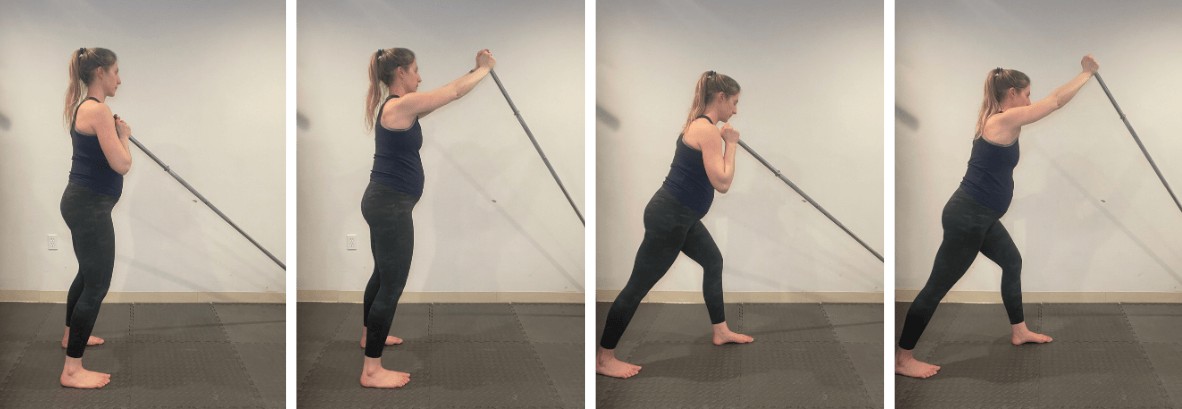
Landmine presses change the angle of your overhead press which allows for less rib flare (aka stress on your core), and better overall stability.
What to Watch For (and When to Modify More)
- Rib flare or excessive arching? → Check your alignment and use an incline or kneeling setup
- Doming/coning in your belly? → Reduce pressure, modify position, and work on deep core strength
- Feeling unstable or off balance? → Use benches, cables, or bands to create more support
- Breath-holding or tension in your core? → Exhale through effort and coordinate with pelvic floor
Modify to Stay Strong, Safe, and Supported
Pregnancy isn’t a time to stop training—it’s a time to train smarter. You deserve to feel strong, capable, and informed at every stage.
These tweaks help you protect your core, reduce discomfort, and continue building strength that’ll carry you through birth and postpartum.
Want to Feel Stronger and More Informed in Your Pregnancy Workouts?
You don’t have to figure it out alone. These resources can help:
✨ Still Lifting, Just Shifting E-Book – Your trimester-by-trimester guide to modifying workouts so you can stay strong and train smart.
🎁 Pregnancy Taper & Postpartum Rebuild Roadmap – A free guide to scaling workouts down in pregnancy and back up postpartum.
🔥 Free Mini Workout Series – 6 short, effective, pregnancy-safe workouts you can do anytime.
📞 Book a Call – Let’s chat through your goals and build a custom plan together.
💬 DM Me – Have a question about modifying something specific? Message me—I’d love to help you feel confident and clear in your workouts.