
Working Out After a Perineal Tear: What You Need to Know
Perineal tears are one of the most common complications of a vaginal birth with about 85% of women experiencing some degree of a tear during birth.
Whether you had a minor graze or a more complex tear, I’ll walk you through everything you need to know to heal fully, avoid setbacks, and feel comfortable and confident in your body, because yes, a tear can impact your workouts.
But First – What Is a Perineal Tear?
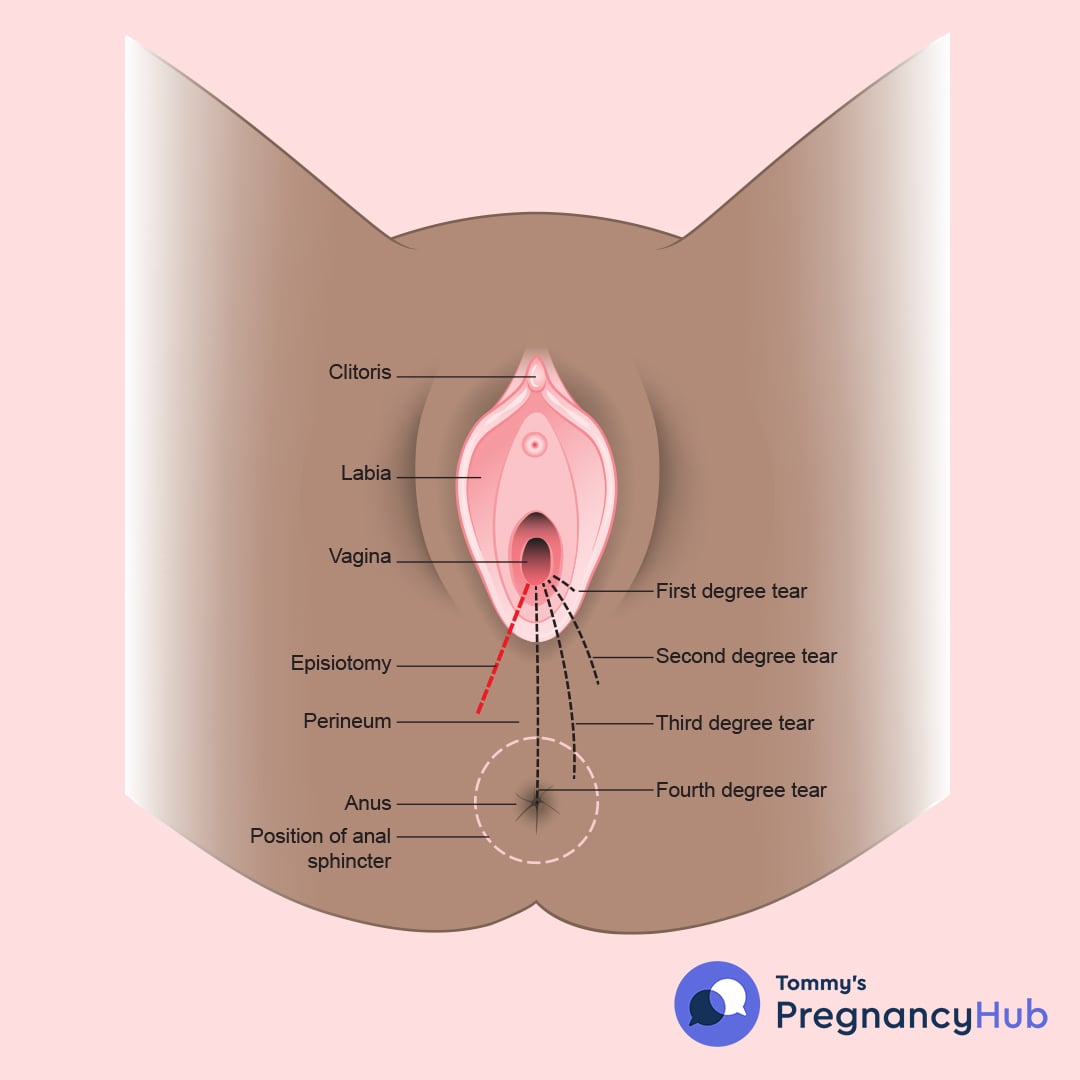
A perineal tear is a tear in the tissue between your vaginal opening and anus, usually sustained during a vaginal birth. They’re categorized into four degrees:
- First-degree: Involves only the skin and superficial tissue. These usually require few or no stitches and heal quickly with minimal discomfort.
- Second-degree: Involves the muscles of the perineum/your pelvic floor. These require stitches and can be uncomfortable while they heal over a few weeks.
- Third-degree: Includes the anal sphincter muscles.
- Fourth-degree: Extends through the anal sphincter and into the rectal lining.
Recovery of third and fourth degree tears, depending on the severity, may require surgery, and can take several months to heal. Seeing a pelvic floor physical therapist is vital to support the healing and recovery of your internal and external tissues with this type of injury.
Most tears are first or second-degree, but even “minor” tears deserve intentional recovery—especially if you’re eager to return to movement and training.
Recovering from a Perineal Tear During the First Two Weeks Postpartum
The early days are about healing, reducing swelling, and reconnecting to your body.
✔️ Rest and Elevation: Prop your hips with a pillow when lying down to reduce pressure and swelling.
✔️ Cold Packs: Great for soothing sore tissue in the first 48+ hours.
✔️ Perineal Support: When standing or walking feels intense, wearing a compression or support garment may feel good for you.
✔️ Spine and Hip Mobility: Because your pelvic floor works in conjunction with your core and spinal muscles, hip and spine mobility will allow for better healing of your PF muscles.
✔️ Deep Breathing: Focus on deep 360° breathing, feeling expansion in your ribs, back, abdomen, and gently down onto your pelvic floor as you breathe in. Not only does this increase blood flow and oxygenation which can aid in the healing of your tear, but it calms your nervous system, promoting healing.
✔️ Pelvic Floor Relaxation: As mentioned above, as you inhale, aim to feel your pelvic floor gently drop and expand. As you exhale, allow for a natural, gentle recoil.
How to Transition from Healing to Movement
First, continue supporting your pelvic floor with rest, cold packs, and support garments as needed.
The following recommendations are best suited for women with a first or second degree tear. If you’ve experienced a third or fourth degree tear your healing timeline will likely take a bit longer because more tissues are involved. My suggestion is to follow the advice below AND see a pelvic floor physical therapist to help create a treatment plan individualized to you.
Here’s how to layer in movement while continuing to support your healing:
1️⃣ Wake up your pelvic floor: continue with mobility and deep breathing, adding some gentle pelvic floor contractions as you exhale to increase blood flow and help with pain and swelling. On your exhale imagine using the opening of your vagina to surround and lift a blueberry up towards your belly button. Do this without squeezing your butt.
2️⃣ Turn on your core canister: learn to coordinate your breathing with deep core engagement to help manage intra-abdominal pressure. This is important because we don’t want the pressure that builds up in our abdomen to press down onto a fragile and healing pelvic floor.
3️⃣ Build from your breath out: start syncing your 360° breath with gentle movement:
-
- Inhale to prepare
- Exhale to gently engage your pelvic floor and deep core before you lift, stand, or move
This teaches your body how to regulate pressure again—so you’re not bearing down or bulging through healing tissue as you move.
4️⃣ Walk it out: going for short walks (10-15 min) is encouraged if they don’t cause pain or incontinence.
5️⃣ Add gentle strength: when that breath connection feels strong and your body tolerates daily movement, you can begin to strengthen the muscles around your hips which will support and stabilize your pelvis and take pressure off your pelvic floor.
-
- Glute bridges (just don’t clench your booty)
- Kneeling squats
- Side-lying inner and outer thigh lifts
- Poor man’s leg curls
If your glutes, hamstrings, and inner and outer thighs are weak, your pelvic floor may try to take over by “tightening” more, which can increase discomfort and worsen dysfunction.
6️⃣ Progress thoughtfully: if you’ve been consistent with breath, mobility, and low-intensity strength for several weeks and have no pain, heaviness, or symptoms like leaking or coning—you may be ready to progress.
But:
🚫 Skip anything high-impact (running, jumping, heavy lifting) until you pass basic movement screens like the ones in my Postpartum Ready for Impact Challenge. (I’d save impact activities for about 6 months postpartum)
🚫 Skip high intensity core work (planks, sit ups, crunches) which require a fully functioning pelvic floor – something your body is still rebuilding
🚫 Don’t push through symptoms (pain is not progress)
7️⃣ Scar Mobility: Most women with a first or second degree tear are “cleared” for exercise at their 6-week appointment because the tear is healed. However, it’s important to understand that perineal scar tissue doesn’t function the same as your original perineal tissue.
Scar tissue can limit the proper function of your pelvic floor causing issues like urge or stress incontinence, pain, and more. If you experienced a tear and pee when you laugh, cough, jump, run, etc., your tear’s scar tissue may be to blame.
Scar tissue can also cause tightness, pulling, and a lack of mobility in and around the other muscles of your pelvis, leading to pain and dysfunction of other tissues. This can 10000% impact your workouts.
So what can you do? I recommend seeing a pelvic floor physical therapist to assess your tear and teach you how to properly massage your scar to break up any adhesions you may have.
If you had a third or fourth degree tear, scar mobility will be huge for you since your tissues went through a more intensive trauma. As I’ve previously mentioned, your return to fitness may be on a slower timeline in order for your tissues to fully heal and regain full function.
Once you’ve got a handle on scar mobility and your movement feels symptom-free, it’s time to start thinking about how to further progress your fitness in a way that supports your long-term strength.
Recovery isn’t one-size-fits-all—but having a general roadmap can help you progress with confidence. The timeline below outlines what a gradual, symptom-aware return to fitness might look like after a perineal tear (especially first or second degree). You’ll move from breathing and mobility → activation → strength → sport-specific training—with each phase building on the last.
✨ Take your time. Heal well now so you can move freely later.

✨ Ready for a clear step-by-step plan to rebuild after birth—without guessing or Googling?
My Renewal After Birth program walks you through six weeks of guided recovery with movement, education, and support built specifically for postpartum bodies (yep, even if you had a tear).
✅ Core & pelvic floor foundations
✅ Breathwork, mobility, and strength
✅ Short, effective workouts you can actually do with a baby around
💥 Feel strong, stable, and like you again—without skipping the healing you actually need.
→ Click here to learn more
When to Get More Support
If you’re still experiencing any of the following after a few weeks:
- Pain with sitting or bowel movements
- Painful intercourse
- Heaviness, bulging, or dragging sensations in your vagina
- Fear or hesitation about movement
- General pain and/or discomfort
…you deserve support. A pelvic floor physical therapist can assess scar tissue, release tension, and give you a rehab plan that works with your goals.
TL;DR: What You Need to Know About Perineal Tears and Exercise
- First-degree tear: These usually heal quickly. Begin breathwork, mobility, and light walking in the first couple weeks. Gradually add strength and coordination work around weeks 3–4, progressing based on how your body feels.
- Second-degree tear: Give your tissues time to heal (expect ~3–4 weeks minimum). Start with breath and core coordination, then after 3-4 weeks layer in low-impact strength like glute bridges, inner thigh work, and mobility. Return to fitness slowly, prioritizing pressure management and pelvic floor function.
- Third- and fourth-degree tears: Healing takes longer and may involve surgical repair. Pelvic Floor PT and recommended as rehab should be personalized and closely monitored. Gentle breathwork, scar mobility, and pelvic floor release can begin early, but strength and fitness should progress under professional guidance.
Returning to Fitness After a Perineal Tear
Healing a perineal tear doesn’t mean giving up your identity as an active, strong woman. It just means giving your body the time, space, and strategy it needs to heal well. When you support your body with the right breathwork, movement, and progression, you’re setting yourself up for strength, confidence, and symptom-free fitness for the long haul.
✨ Ready for a step-by-step recovery plan that fits your life and your body?
Renewal After Birth is a 6-week program that blends expert-backed movement, breathwork, and strength so you can heal well and return to exercise safely.
→ Perfect if you want a no-guesswork plan that meets you where you are.
📖 Want a clear, visual guide to scaling your strength postpartum?
Download my Postpartum Rebuild Roadmap—a free PDF that shows you exactly how to safely build back up when your body is ready.
📞 Want personalized support?
Book a call and let’s build a realistic, recovery-focused plan that honors both your healing and your fitness goals.
💬 Not sure where to start?
DM me on Instagram @birthbodysoul and tell me what you’re feeling. I’ll help you figure out your next best step. You don’t have to do this alone.