
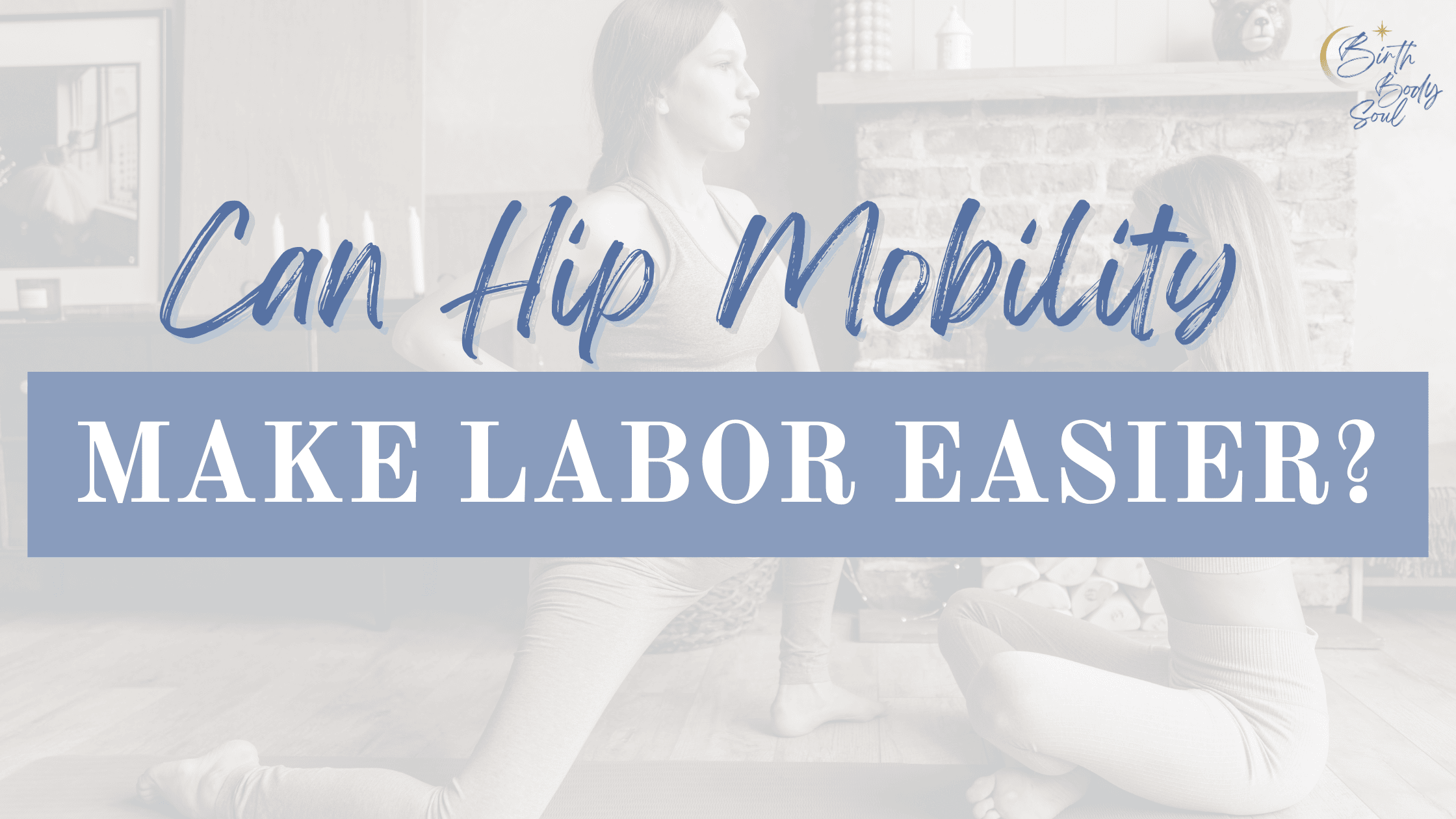
Labor is the ultimate athletic event, and like any big physical challenge, your body needs preparation and practice. Enter hip mobility—a game-changer for labor prep. If you want to keep things moving (literally), it’s time to get those hips open and ready to roll.
Why Hip Mobility Matters for Labor
Your pelvis is the gateway for your baby’s entrance into the world. It has multiple levels (yes, really!), and your baby’s journey involves navigating each one. The more mobile and flexible your hips, the easier it is to create space and help your baby move through smoothly.
Labor, true to its name, requires movement and effort—squatting, lunging, and shifting into pelvic positions will help with contractions and baby’s descent. Good hip mobility in pregnancy can help you move well during labor, easing discomfort and even speeding up labor.
Want step-by-step guidance to get your pelvis ready for labor? Check out my eBook, Opening Your Pelvis for Birth, packed with exercises and stretches to help you prepare like a pro.
Understanding your 3 Pelvic Levels for a Smoother Labor
Your pelvis isn’t just a single structure; it has distinct levels that play key roles during labor:
- Inlet:
This is where your baby first enters your pelvis. Your inlet is widest side-to-side and narrowest front-to-back, so movements like deep squats with a tucked butt help increase the space for your baby’s head. - Mid-pelvis:
The “tight squeeze zone,” your mid-pelvis is where your baby rotates to face your back (ideally). This level is widest diagonally, making asymmetrical movements like side lunges or hip dips crucial for creating space. - Outlet:
This is the finish line. Your outlet is widest front-to-back and narrowest side-to-side, so positions that help get your tailbone and sitz bones out of the way like kneeling or hands-and-knees with knees in, ankles out can help your baby descend and emerge smoothly, often reducing the risk of tearing. For more on the make-or-break importance of knees in, ankles out, known as internal rotation, check out this blog post!

Ready to help your baby navigate every level of the pelvis with ease? My eBook, Opening Your Pelvis for Birth, shows you how to target each area with effective movements.
The Cardinal Movements of Labor
As your baby navigates your pelvis, they perform a remarkable series of maneuvers that correspond with the levels of your pelvis called the cardinal movements:
- Descent & Engagement: Baby’s head enters your pelvic inlet. A wider inlet and hip mobility creates more space for baby to engage and align optimally
- Flexion: The baby tucks their chin to match the curve of your sacrum
- Internal Rotation: Baby rotates their head as they navigate your mid-pelvis into your pelvic outlet. This allows the long axis of their head (front to back) to line up with the long axis of your outlet (front to back). Positions that allow for asymmetrical movement can encourage this rotation. Shoulder rotation follows to match the long axis of your pelvic inlet (side to side).
- Extension: Baby’s head tilts back as they move under your pubic bone and through your pelvic outlet; this is where your baby’s head is delivered. Kneeling or squatting with knees in, ankles out helps create space here
- External Rotation (Restitution): Baby’s head rotates slightly to re-align with their shoulders after delivery of the head
- Expulsion: The baby’s body is born!
Understanding these movements helps you appreciate how hip mobility supports every stage of labor, giving your baby the best chance at a smooth journey.

Keeping Your Hips Open and Ready for Labor and Pushing
In my VLOG, “How Hip Mobility During Pregnancy Supports a Smooth Labor,” I dive into specific movements to keep your pelvis prepped. Expect moves like:
- Deep squats to create space in your pelvic inlet
- Side lunges to open up your mid-pelvis and encourage rotation
- Hinges and internal rotation to increase the diameter of your outlet
Key Insights for Preparing Your Pelvis for Labor
A mobile pelvis = fewer obstacles for baby. By keeping your hips limber, you’re setting the stage for a smoother labor and recovery. With guidance from Opening Your Pelvis for Birth, you can build the confidence and flexibility to support a smoother labor. Remember, pelvic mobility is your secret weapon for conquering the intensity of labor with confidence.
So, grab your yoga mat, tune into the VLOG, and let’s get those hips moving. Your baby (and your labor) will thank you!
Ready to move?
Watch the VLOG and follow along as I demonstrate these essential hip-opening exercises! Let’s get you strong, mobile, and prepped for birth like a pro.