
How to Modify Exercises for Pelvic Stability and Pain Relief in Pregnancy and Postpartum
During pregnancy and postpartum, your body is naturally more mobile. And while that’s great for birth, it can lead to instability and discomfort in your pelvis—especially around the SI joint, pubic symphysis, and lower back.
But good news: Small tweaks to your workouts can support your changing body and stay strong, stable, and pain-free.
These six movement tweaks below are especially helpful if you’re dealing with pelvic pain, feel wobbly or uneven in your workouts, or just want to better support your body through pregnancy and recovery.
Why Pelvic Pain Shows Up (and Where You Might Feel It)
Pregnancy and postpartum bring a whole lot of change—hormonally, physically, and structurally. One big shift? Increased laxity in your joints, which means some of your joints may become more mobile and less stable, causing pain.
That combo is great for helping your baby move through your pelvis during labor—but not so great for your SI joints, pubic symphysis, or lower back if the surrounding muscles aren’t supporting you well. And, relaxin sticks around postpartum, especially if you’re breastfeeding.
You might feel this instability as:
🔹 Aching or pinching in your SI joints (where your spine meets your pelvis, in the dimples above your butt)
🔹 Sharp pain at the front of your pelvis (pubic symphysis)
🔹 Lower back tightness or soreness (especially with standing, lifting, or walking)
🔹 Deep hip or glute discomfort on one or both sides
🔹 A feeling like things are “shifting” when you walk or move
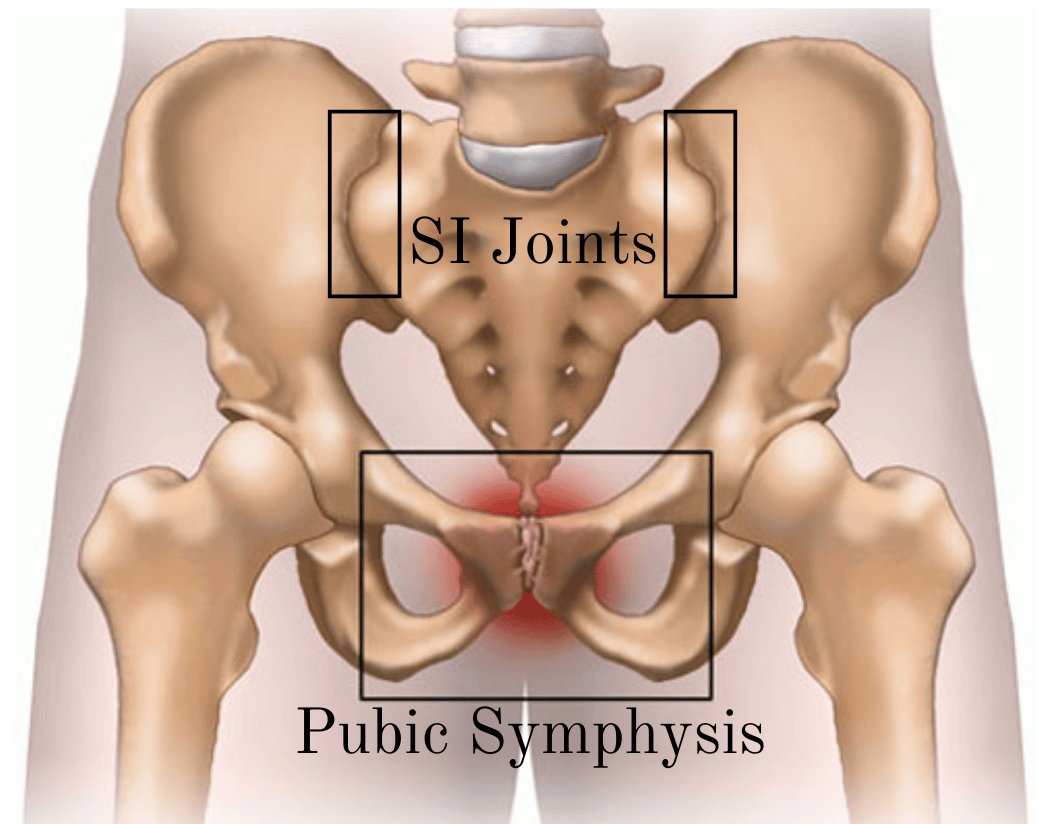
That’s why increasing pelvic stability through movement is so important—it’s one of the most effective ways to reduce pain and help your body feel more supported.
So let’s jump into some simple tweaks you can make to your workouts to give your pelvis a nice “hug” for some extra stability. You’ll also find a VLOG for this blog post after the written tips so you can see each of these in action!
1. Add Rotation
Why it helps:
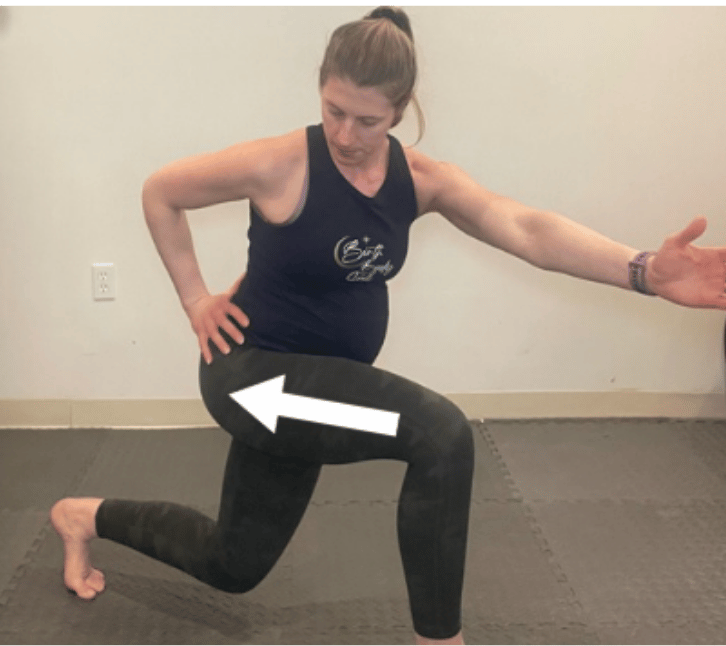
Rotating the right side of your belly towards your left thigh (and vice versa) creates more “closure” and stability to the front of your pelvis. In other words, rotation helps snug up the space between the two sides of your pelvis.
Bonus: this creates internal rotation at your hips which is vital for creating more space in your pelvis for birth!
How to do it:
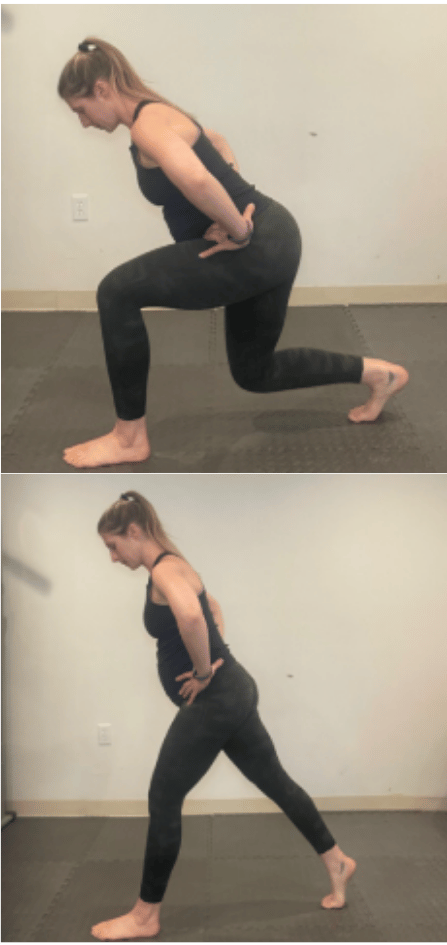
- Lunges: as you lower, gently rotate the opposite side of your belly toward your front inner thigh. Rise and return to neutral.
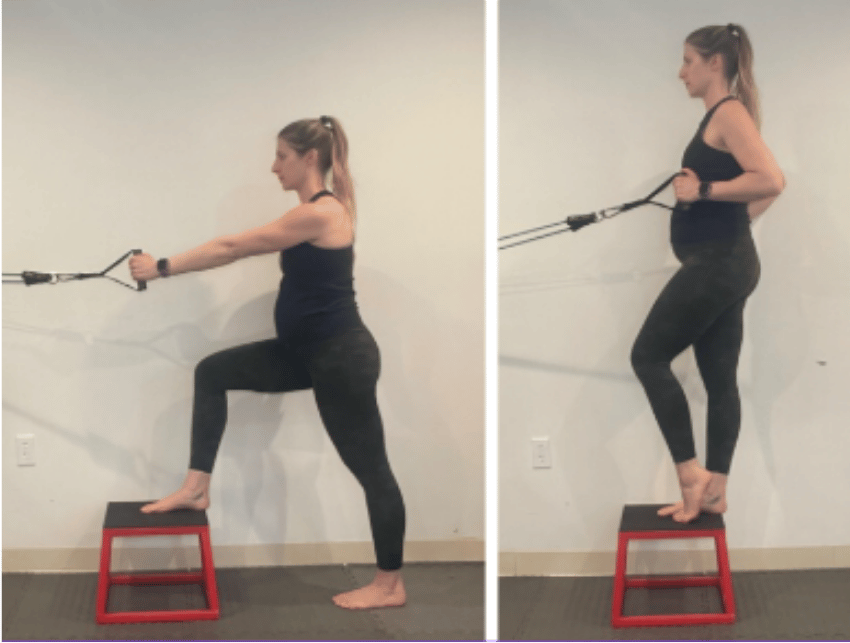
- Step Ups: rotate before you step—if your right foot is on the block, rotate the left side of your belly towards your right inner thigh. As you rise, return to neutral.
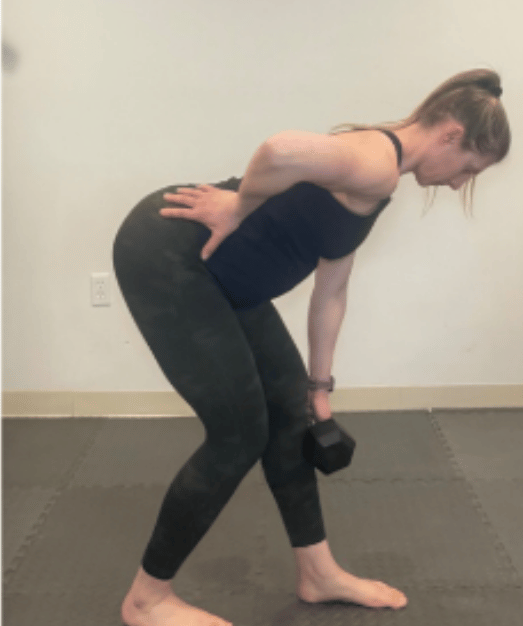
- Deadlifts: take a split stance (see below for another benefit of this stance). Hinge while rotating the opposite side of your belly toward your front inner thigh. Return to neutral on the way up.
💡 Want help adjusting your workouts for each trimester?
My Still Lifting, Just Shifting E-Book gives you the exact modifications (like adding rotation) you need to keep training through pregnancy safely — with less discomfort and more confidence.
2. Try a Split Stance
Why it helps:
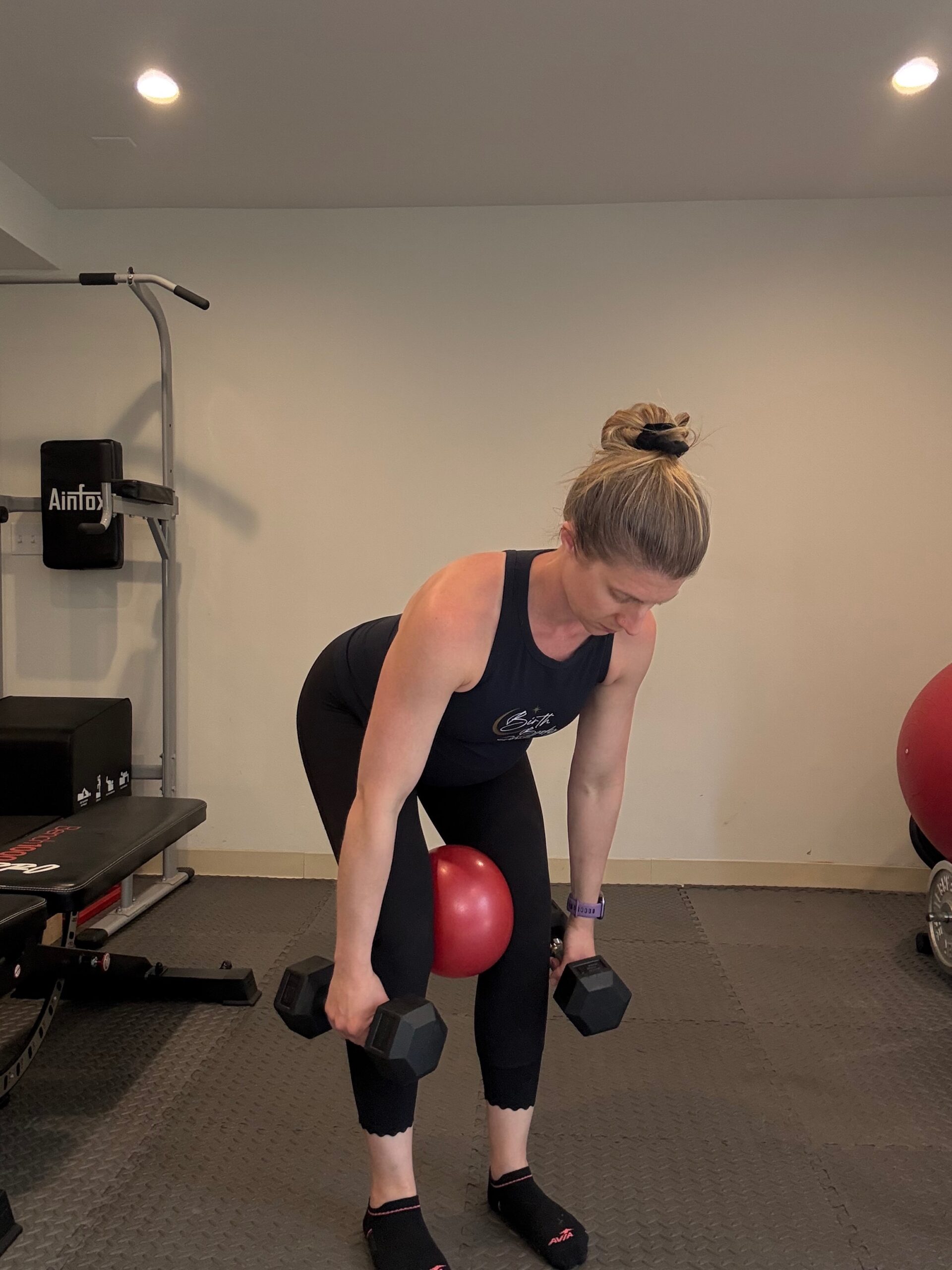
Keeping your feel parallel in a regular deadlift may put too much strain on your lower back, especially if you have an exaggerated lower back arch. A split (or B) stance takes pressure off of your lower back by shifting your weight slightly and engaging more glutes and hamstrings.
How to do it:
Stand with one foot forward and one back a few inches (like you’re standing on train tracks). Hinge at your hips, sending your butt back, bending your back knee, and keeping your front leg straight-ish. You should feel a large stretch in the front hamstring. To rise, drive your front heel into the ground and think about sliding that heel towards you to “pull” your torso up.
3. Add a Squeeze to Activate Your Inner Thighs
Why it helps:
Your adductors (inner thighs) act like anchor points at the base of your pelvis, helping stabilize your hips and support your pelvic floor. But they often get overstretched and shut off during pregnancy—especially with the “waddle” gait, which can cause instability and pain. Adding a light squeeze wakes them up and helps your whole core team work better together.
How to do it:
Place a yoga block or Pilates ball (or even some pillows!) between your knees during squats, deadlifts, glute bridges, core work, or even breathwork. Gently squeeze as you exhale to reawaken your inner thighs and help your entire core system work better together.
🔥 Need a quick workout to strengthen your inner thighs?
Grab my free Mini Workout Series—you’ll get six 10-minutes and under, pregnancy and postpartum-friendly workouts, including one just for your inner thighs!
4. Reduce Overall Movement
Why it helps:
Keeping your feet planted as opposed to moving on each rep reduces the overall strain and shearing force on your pelvis.
How to do it:
- Lunges: instead of walking lunges, leave your feet planted in a split lunge.
- Step Ups: instead of stepping both feet back to the floor, leave one foot on the block at the bottom of the rep before stepping back up.
👣 Curious how to safely scale workouts as your body changes?
Download my Pregnancy Taper & Postpartum Rebuild Roadmap for how to scale down your exercises as pregnancy progresses and gradually rebuild your strength as you get deeper into your postpartum recovery.
5. Add Cross-Body Movements to Activate Your Muscular Slings
Why it helps:
Movements that involve one side of your upper body and the opposite side on your lower body (think opposite glute + lat) help “hug” your pelvis to give it more stability.
These cross-body movements activate your muscular slings that wrap around your body to give your pelvis strength and control, transfer force between upper and lower body, and allow you to move more efficiently. These are especially helpful postpartum when you’re rebuilding stability and want to prevent compensations.
Some examples of how to do it:
- Step Ups: place one foot on the block with a band in the opposite hand of your stepping leg. As you step up, row.
- Squats: hold a band in both hands. Lower with straight arms and as you rise, row both arms.
- Half Kneeling Palloff Press: position yourself with your outside leg in front, bands attached to the opposite side. Exhale and press the bands in front while activating your inside oblique and outside leg’s hamstring and inner thigh
- Elevated Copenhagen Plank: hold a side plank with bottom forearm on an elevated surface (bench, couch, etc). Exhale to gently unweight your bottom leg.
💡 Want to learn more? Check out these blogs/vlogs to dive deeper and discover more cross-body exercises:
6. Add Resistance to Just One Side
Why it helps:
Using asymmetrical resistance (like holding weight on one side or using a band around one leg) forces your core to engage more and helps uncover and even out strength imbalances—like favoring one side when you carry your kiddo 100 times a day.
How to do it:
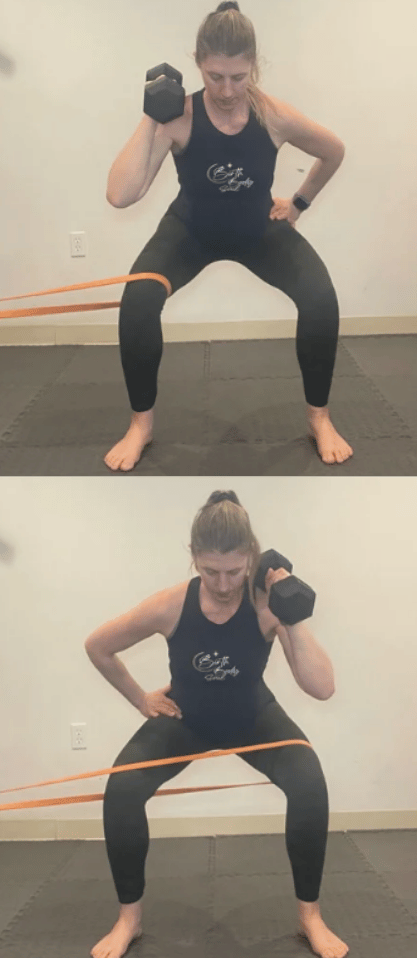
- Offset squats or lunges: Hold a dumbbell on one side at shoulder height. Your core will fire to keep you centered.
- Single-knee banded squats or lunges: During a squat or lunge, place a resistance band around one knee to increase the demand and encourage better muscle activation. Many of us naturally have a weaker left inner thigh and a weaker right glute, which can create imbalances. If you notice this in your body, try adding a resistance band on just those sides to help even things out. If you don’t notice a difference, these variations are still great to incorporate on both sides to add a slightly different demand to your exercises.
🎥 Prefer to see it in action? Watch the VLOG below for guided demos of each movement tweak!
Incorporating these exercise modifications can make a significant difference in your comfort and stability during pregnancy and postpartum. Always consult with a healthcare provider or a qualified fitness professional before starting any new exercise regimen.
Ready to take the next step?
- Pregnancy Taper & Postpartum Rebuild Roadmap FREEBIE – Your free guide to navigating fitness during pregnancy and recovery. Learn how to scale down safely, then rebuild smart for the long haul.
- Still Lifting, Just Shifting – This trimester-by-trimester guide teaches you how to modify workouts to support your strength, mobility, and pelvic stability without guessing what’s safe.
- Book a Consultation – Struggling with persistent pelvic pain or not sure how to modify your workouts? Let’s create a plan that supports your body and helps you move with more confidence and less discomfort.
- DM Me – Feeling overwhelmed or unsure what’s right for your body? Send me a message—I’m here to help you feel strong, stable, and supported. 💛