
Lifting Weights While Pregnant—Safe or Risky? Safe!🎉 And Here’s Why it’s so GOOD for You!
Think lifting weights is dangerous during pregnancy? Think again.
If you’ve ever been told to “take it easy” during pregnancy, you’re not alone. Somewhere along the way, we started treating pregnancy like an injury instead of what it actually is—a time when your body needs to be stronger than ever to carry, birth, and recover from having a baby.
So let’s get one thing straight: Yes, you absolutely can lift weights during pregnancy. And no, it won’t “hurt the baby” or cause labor to start too soon. In fact, lifting weights safely during pregnancy can help you feel stronger, more energized, and better prepared for labor, delivery, and postpartum recovery.
If you’re wondering:
✔️ Is strength training safe during pregnancy?
✔️ Will lifting weights help with aches and pains—or make them worse?
✔️ What’s the best way to modify workouts as your belly grows?
…then you’re in the right place. Let’s break down why prenatal strength training is one of the best things you can do for yourself.
Why Strength Training During Pregnancy Is a Game-Changer
Pregnancy is one of the most physically demanding events your body will ever go through.
Name one other athletic event we go into with zero training or preparation…I’ll wait. And if you do, you’ll probably end up hurt because we’re not 16 anymore 😂
Strength training while pregnant supports your body through these changes, helping you feel more stable, strong, and prepared—not just for birth, but for everything that comes after.
Let’s look at a few benefits you can look forward to:
1. Exercising During Pregnancy Prepares Your Body for Birth (Yes, Even if You’re Planning an Epidural)
Labor isn’t a passive event—it’s an athletic one. Whether you’re planning a medicated or unmedicated birth, strength training can help you:
- Build endurance for labor & pushing because most labors last a heck of a lot longer than a 5K, a WOD…or even a marathon.
- Strengthen your diaphragm, core & pelvic floor for better pushing control and efficiency.
- Improve stamina to help you handle the physical demands of labor and recovery.
- Reduce the likelihood of medical interventions. Mobility and breathwork play a big role in how efficiently your body moves through labor. The more balanced, mobile, and strong you are, the less likely you are to need interventions like forceps, vacuum, or even a C-section.
Think of lifting weights during pregnancy like training for birth—because that’s exactly what it is.
2. Lifting During Pregnancy Can Reduce Aches & Pains
That low back pain, hip discomfort, or pelvic pressure? It’s not just “part of pregnancy” or something you just have to deal with — it’s often a sign of muscle imbalances. Strength training can help by:
✔️ Supporting your lower back & pelvis by strengthening your glutes, core, and posterior chain.
✔️ Improving hip stability to reduce pain from ligament laxity.
✔️ Keeping your posture strong to prevent that “hunched over” feeling as baby gets bigger.
✔️ Increasing pelvic mobility so labor progresses more smoothly.
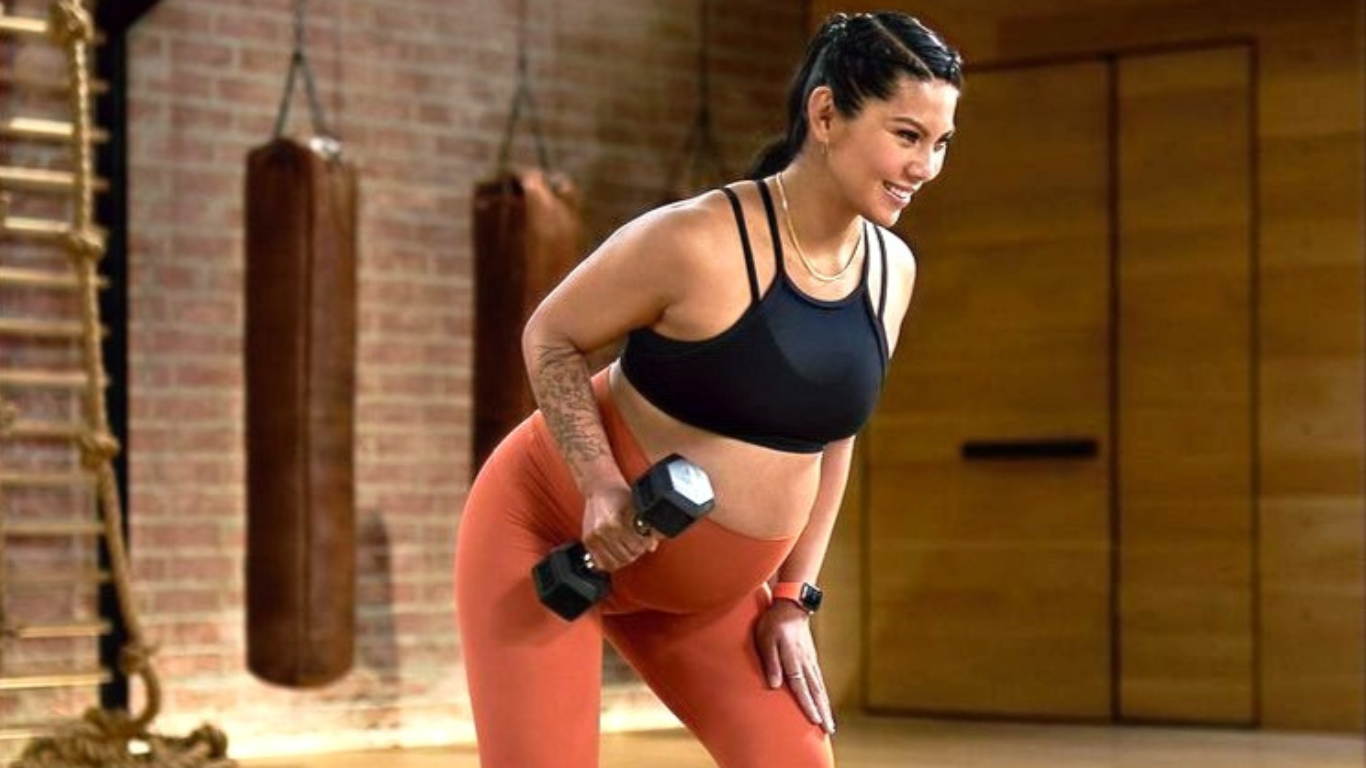
👉 Want to know which muscle systems are key for keeping your pelvis stable and decreasing those aches and pains? Check out the blog posts on each of these key muscle systems:
- Deep Longitudinal Sling – Supports SI joints, absorbs impact.
- Posterior Oblique Sling – Crucial for core + glute connection.
- Anterior Oblique Sling – Helps manage intra-abdominal pressure.
- Lateral Sling – Vital for balance and single leg movements.
3. Prenatal Strength Training Can Support a Faster Postpartum Recovery
Ever heard the phrase, “It’s easier to keep up than to catch up”? That applies big time to postpartum recovery.
- Maintaining strength during pregnancy can help you recover faster postpartum especially if you take the time to build a strong inner core (read more about that here) while still pregnant.
- Strengthening your core, hips, and glutes now can mean less pain and dysfunction later as these muscles can help “hug” your pelvis and give you stability once your baby is here. (make sure you scroll back up to those Sling blog posts)
- A strong foundation can make it easier to return to fitness without setbacks or injuries when done slowly and smartly.
You’re not just training for pregnancy—you’re training for everything that comes after it.
4. Working Out During Pregnancy Boosts Energy & Mood
Pregnancy exhaustion is next-level, and ain’t nobody got time for all that fatigue. Strength training can actually help combat your exhaustion.
💡 First trimester PSA: If you’re completely wiped out, REST. Even if it’s for weeks (or months). Your body is hard at work producing more blood, and sending all that extra blood throughout your body, and ya know….growing organs and a whole human from scratch. Workouts can wait.
But if and when you feel up for it, regular movement improves circulation, oxygen flow, and energy levels—so instead of feeling wiped out after a workout, you’re more likely to feel energized and clear-headed.
Plus, lifting weights releases endorphins (your body’s natural feel-good hormones), which can help:
✔️ Improve your mood
✔️ Reduce stress & anxiety
✔️ Promote better sleep (more on this below!)
So if pregnancy has you feeling exhausted or overwhelmed, strength training might be the boost you need.
5. Exercise During Pregnancy Helps You Sleep Better
Pregnancy insomnia? Yep, it’s a thing. (WTF) But regular movement can help.
✔️ Strength training reduces stress & restlessness, helping you fall asleep faster.
✔️ Improves circulation to prevent those annoying middle-of-the-night leg cramps.
✔️ Helps regulate energy levels, so your body is actually ready to wind down at night.
A good night’s sleep is a pregnant mom’s best friend—and lifting weights can help you get it.
6. Helps Prevent Excessive Weight Gain & Gestational Complications
Let’s be clear: pregnancy is not the time to focus on weight loss (unless instructed by your doctor). But staying active can help reduce the risk of:
- Excessive weight gain (which can contribute to complications like gestational diabetes or hypertension).
- Gestational diabetes by improving insulin sensitivity.
- High blood pressure & preeclampsia by supporting cardiovascular health.
And the best part? You don’t have to work out for hours to see the benefits. Even 2-3, 30-minute strength training sessions per week can make a huge difference in your pregnancy experience.
7. Strength Training May Lead to Shorter Labors and Fewer Interventions
Regular strength training during pregnancy can improve endurance, mobility, and overall pelvic function—which may translate into shorter labors and a decreased need for interventions like forceps, vacuum, or even C-sections. But lifting weights during pregnancy doesn’t just prep your body—it preps your mind, too. When you’ve practiced staying calm and focused while pushing through discomfort during a workout, it can help you stay more grounded and confident during contractions.
Stronger muscles, better breath control, the ability to tolerate discomfort, and a more mobile pelvis can make pushing more effective and help baby move through more smoothly. Of course, nothing is guaranteed (birth is unpredictable!), but preparing your body through movement stacks the odds in your favor—and that’s a big win.
But PS – you still need to put in the birth prep work! Working out doesn’t take the place of education and preparation!
How to Lift Weights Safely During Pregnancy
1. Prioritize Full-Body, Functional Movements
Pregnancy is full of real-life strength work—lifting, bending, squatting, carrying. Focus on:
✔️ Squats & lunges for pelvic stability
✔️ Rows & deadlifts for posture
✔️ Glute bridges for core & pelvic floor support
✔️ Carries and anti-exercises (e.g., suitcase carries) for core strength
2. Adjust Intensity as Needed
✅ Moderate resistance training with a focus on form
✅ Using the “talk test”—if you can’t hold a convo, you’re working too hard
✅ Stopping before fatigue sets in (you should finish feeling strong, not wrecked)
Unsure how to modify your favorite exercises as your belly grows? I got you! My Still Lifting, Just Shifting e-book walks you through variations and modifications for squats, deadlifts, shoulder presses, and so much more so you can continue safely working out. Get on the waitlist here – this must-have e-book drops Monday, April 7, 2025!!
3. Pay Attention to Your Core & Pelvic Floor
✔️ Use diaphragmatic breathing to manage intra-abdominal pressure.
✔️ Modify movements to prevent coning or doming in your core.
✔️ Strengthen (but also learn to relax!) your pelvic floor—because tight isn’t strong. In fact, in the back half of the second trimester, my clients start to emphasize pelvic floor release; since a baby has to move through there, we need it to relax and lengthen.
Ready to Strength Train Smarter During Pregnancy? Let’s Make It Happen.
Lifting weights during pregnancy isn’t just safe—it’s one of the best things you can do for yourself. When done right, it can reduce pain, improve energy, prepare you for birth, and set you up for an easier postpartum recovery.
📩 DM Me – Not sure how to modify your workouts? Let’s chat—I’m here to help!
🎁 Grab My Birth Prep Freebie – Learn four daily exercises to feel mentally and physically strong and perepared for birth. [Download it here!]
📚 Unlock All the Pregnancy Workout Secrets – My Still Lifting, Just Shifting E-Book is your go-to guide for safe, effective pregnancy modifications—so you can keep doing your favorite workouts, and stay strong, supported, and ready for birth. [Get on the waitlist here – being released 4/7/25!]
Final Thoughts on Lifting Weights During Pregnancy
Pregnancy isn’t the time to stop moving—it’s the time to train for the most physically demanding event of your life. Lifting weights can help you feel strong, capable, and confident through pregnancy, birth, and beyond.