

Should Your Run with Diastasis Recti?
If you’re here reading this, you’re probably itching to get back to running because it feels like freedom—a return to “normal.”
But before you lace up and hit the pavement, there’s one huge factor you need to address first: your diastasis (aka the separation of your abdominal muscles that naturally happens during pregnancy).
Ignoring it or rushing ahead can lead to leaking, pain, coning, or long-term setbacks.
Let’s talk about why your core recovery matters so much—and what needs to happen before you return to running safely.
Why Diastasis Matters for Runners
Running is a high-impact, single-leg, yet full-body activity—and it places a ton of demand on your core and pelvic floor.
With a diastasis, your core struggles to manage pressure and stabilize your body. And since your core plays a major role in stabilizing your pelvis when you run, that’s kinda a big deal.
What that means in real life:
- Your abdominal wall can’t transfer force efficiently so running feels harder and more fatiguing
- Your pelvic floor picks up the slack, which can lead to leaking or prolapse symptoms
- Your diastasis has a harder time healing due to the constant and excessive strain of running
- You’ll have poor running form and compensatory patterns, potentially causing other issues like back, knee or hip pain, tendonitis, plantar fasciitis, and more.
Let’s break down why your core matters so much for running—and what needs to be in place before you add miles.
If You’re Not Training Your Core This Way, You’re Not Ready to Run
Running requires core strength and control in your sagittal, frontal, and transverse planes, which are just fancy words for how your body moves.
But most postpartum core programs focus solely or mostly on the first two—ignoring the transverse plane entirely.
And if you’ve got diastasis? That’s a problem because transverse plane movement is key for healing a diastasis AND for running well. (yes I’ll tell you what the heck transverse plane actually means ⬇️)
So let’s take a look at how to heal your diastasis from every angle so you can return to running feeling supported. 💪🏽
(PS – anything you see in aqua below is hyperlinked)
✅ Sagittal plane strength
What that looks like at your core: bending/rounding forward and extending your spine
Target muscles: rectus abdominis (6-pack muscles), spinal erectors, deep core, hip flexors
Exercise ideas:
- Any anti extension exercise like dead bug, bird dog, heel drop, ball roll out, plank
- Any anti flexion exercise like hip extension, superman, press outs
How sagittal plane core strength helps running:
- builds deep core control and pelvic alignment
- strengthens joint flexion (bending) and extension
- helps with posture and control

✅ Frontal plane strength
What that looks like at your core: side bending of your torso
Targeted muscles: obliques, hip abductors, and adductors
Exercise ideas:
- Any lateral sling exercise like single leg inner and outer thigh work
- Any anti lateral flexion exercise like side plank, suitcase hold/march/carry, offset squat, windmills,
How frontal plane core strength helps running:
- trains you to stabilize through your obliques and glutes—key for absorbing impact
- helps maintain balance especially when changing directions quicky
- creates strength in the hips to prevent hip drop
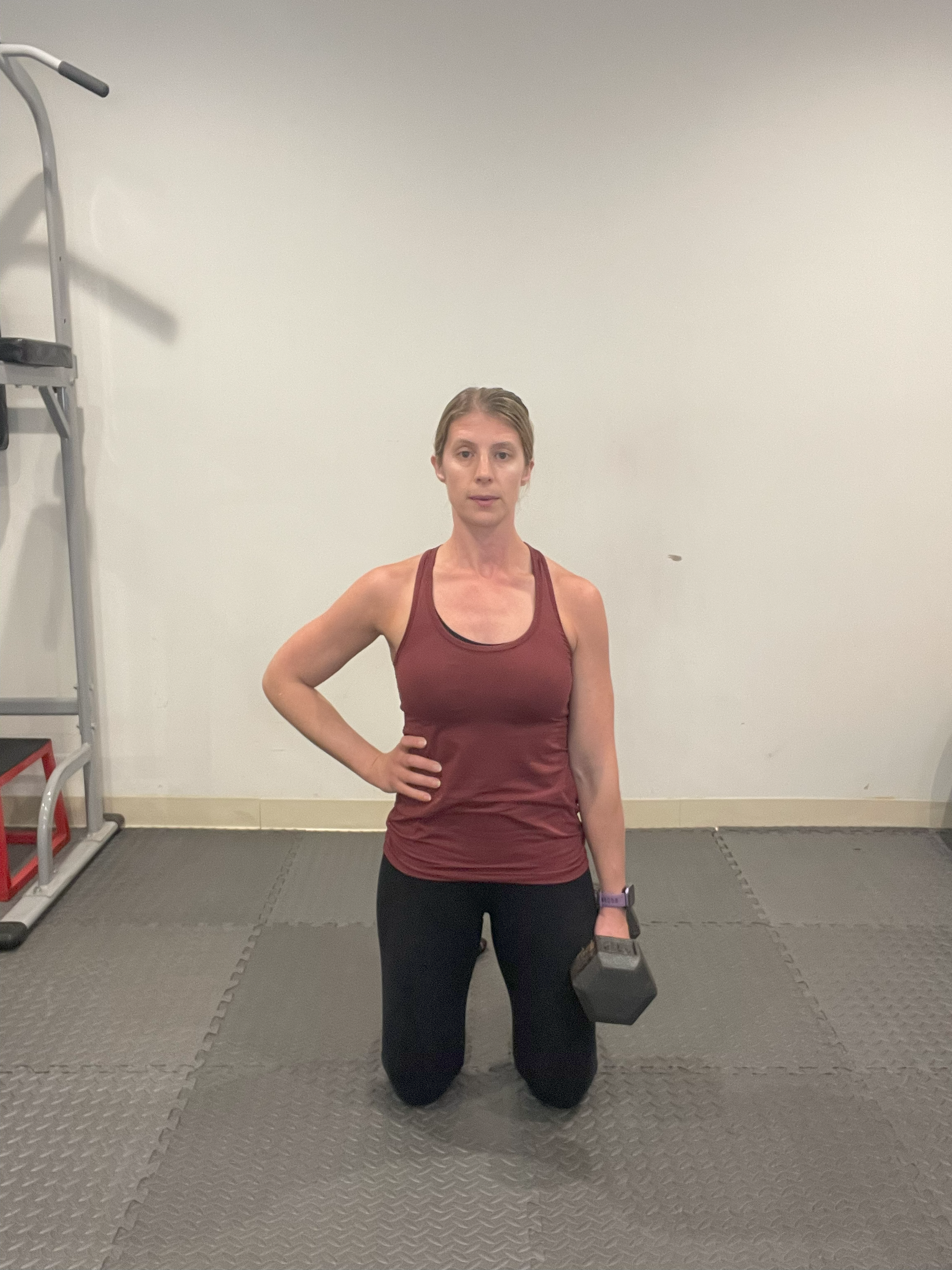
✅ Transverse plane strength
What that looks like at your core: rotation through the spine
Targeted muscles: internal and external obliques, deep core muscles
Exercise ideas:
- Any anterior oblique sling exercise like woodchop variations
- Any anti rotation exercise like pallof press, landmine twist
- These exercises – lunge twist, woodchop,etc – are especially vital for C-section moms
- Others: Russian twist or rotational wall ball throw
How transverse plane core strength helps running:
- enhances balance and coordination between your upper and lower body
- increases force production and rotational power
- mimic the real-life movement demands of running
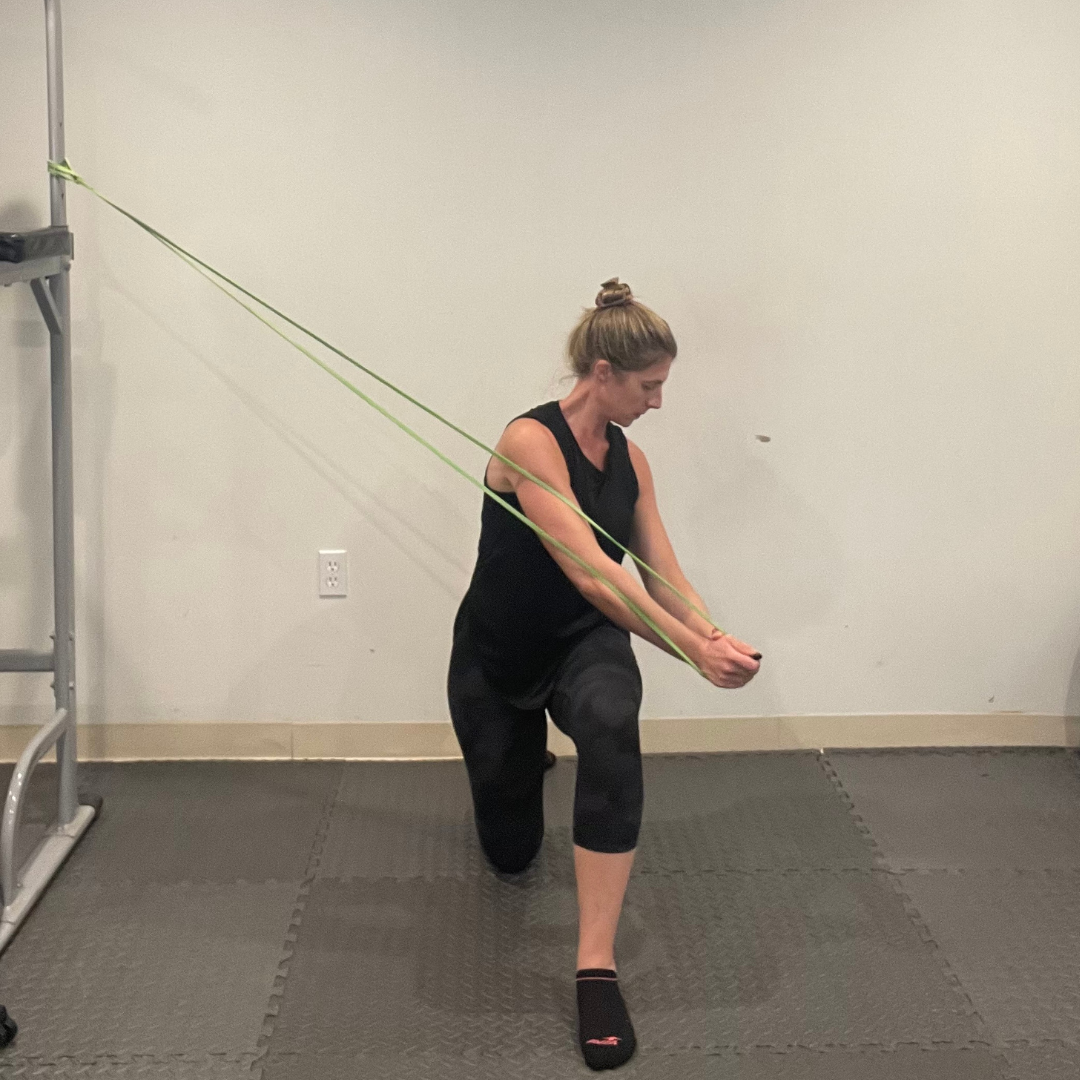
When your core is strong in every direction and your diastasis is healing (or healed), your body’s finally ready to handle the demands of running—without falling apart. 🥳
The Missing Link in Most Postpartum Running Plans
Most “return to running” programs skip this core-focused approach. They jump from walking to jogging to running without ensuring the core is ready. That’s why so many moms end up frustrated or injured.
If your core can’t manage pressure, no amount of glute work will save your pelvic floor.
You need strength in all planes—and diastasis recovery is the entry point.
Wondering if You’re Ready to Run?
Before you hit the pavement or the treadmill, let’s make sure your body is actually on board. Because running requires more than just core strength (duh beth), and a good sports bra!
🚨And if this all feels a little advanced, read this first. It lays the groundwork if you’re just starting your postpartum run comeback.🚨
✨ My *free* Getting Back to Impact guide walks you through 4 categories of running readiness – strength, balance, impact reaction, and mobility – with a test for each to help you gauge where you’re at!
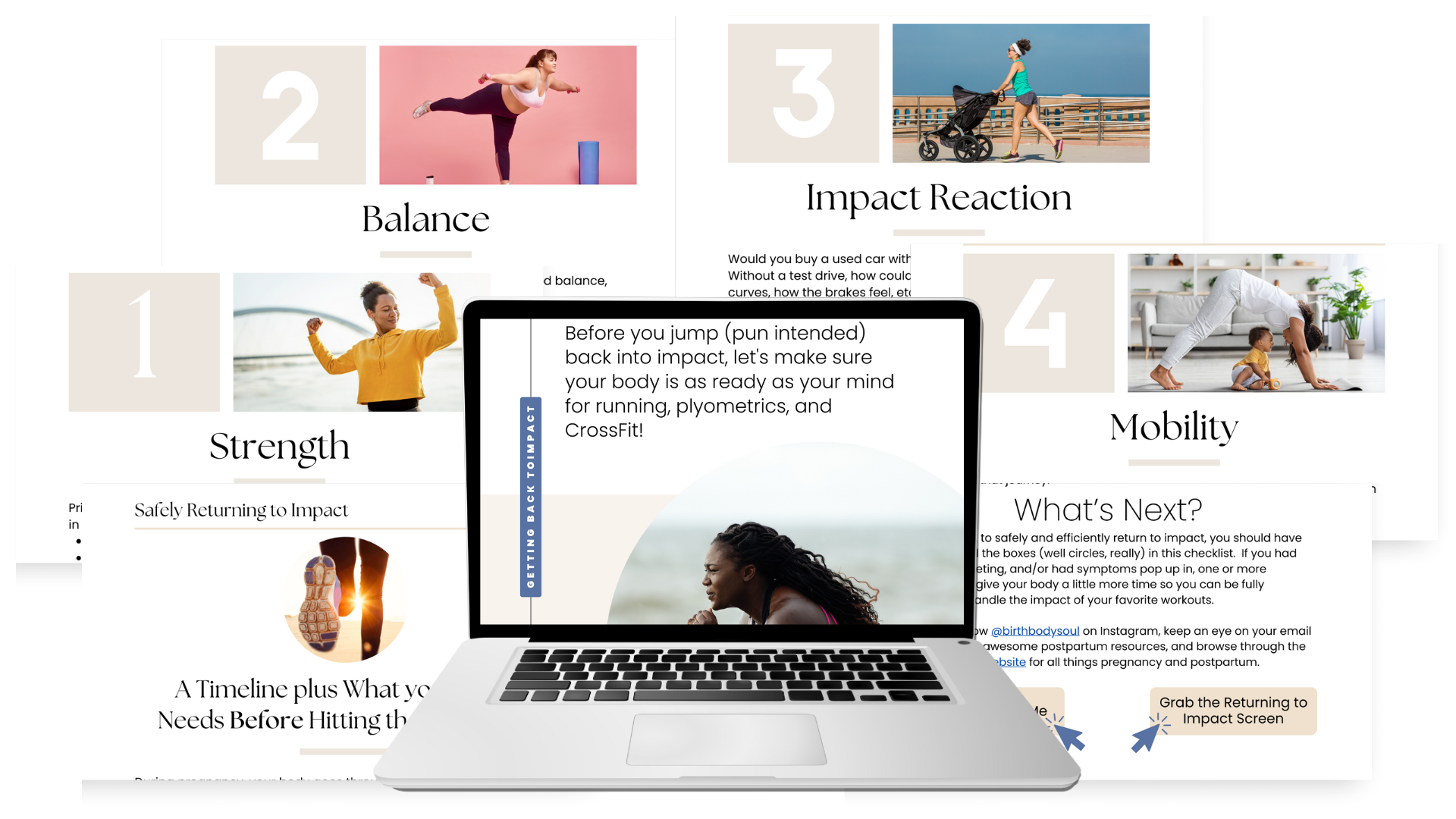
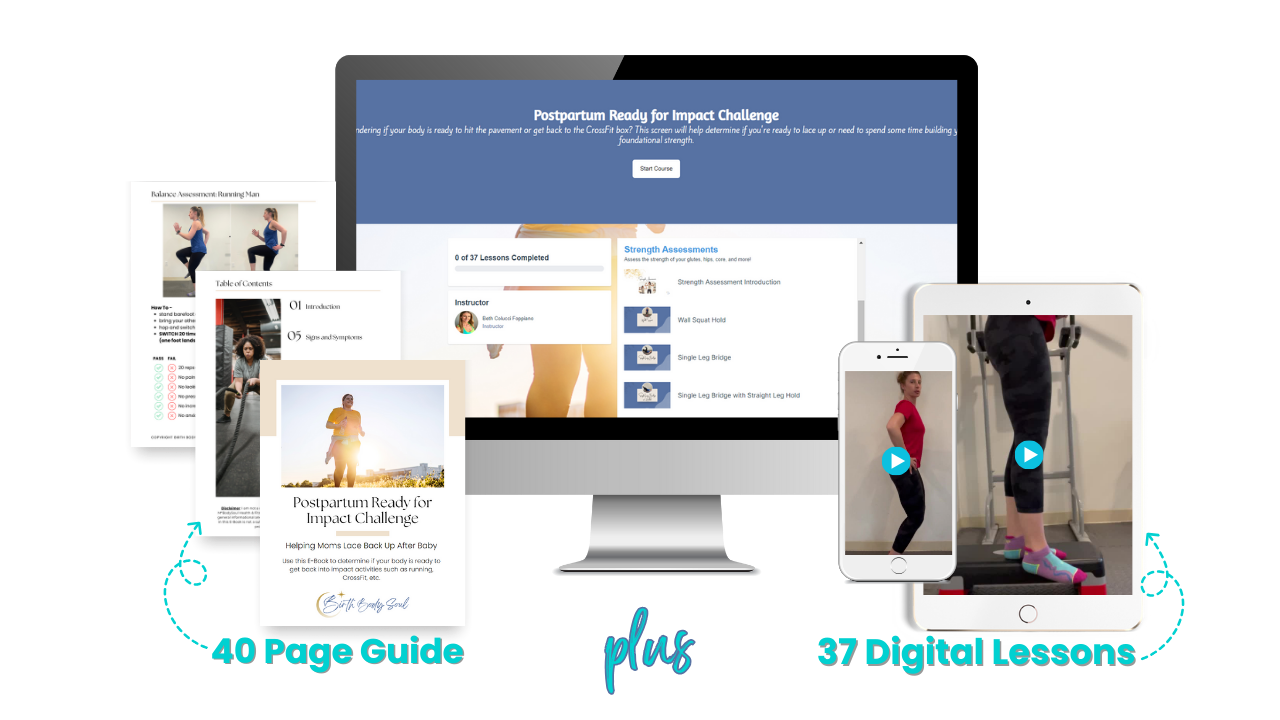
OR if you’re reading to jump (pun intended) into the full set of movement “tests,” check out my Postpartum Ready for Impact Challenge. You’ll get a full battery of assessments across all four categories to know, for sure, whether your body is truly ready to run.
Running Can Wait—Recovery Shouldn’t
If you have diastasis I don’t want you to feel discouraged.
You don’t have to give up running forever – but if you want to come back without pain, leaking, or long-term dysfunction, you do need to prioritize healing your core first.
Because when your core is strong, connected, and pressure-ready?
Running won’t just feel possible—it’ll feel powerful.💥
Want to Know If Your Body’s Really Ready to Run?
Here’s how I can help:
✨ Getting Back to Impact (free guide) – This free email series walks you through essential movement tests to help you gauge whether your core, balance, and mobility are ready for running
🧠 If you’ve been wondering, “Can I run yet?”—start here.
🔥 Postpartum Ready for Impact Challenge – My go-to challenge to assess your running readiness with targeted tests across strength, stability, coordination, and more.
🏃🏽♀️ Feel empowered, not uncertain—this gives you real answers.
📞 Book a Call – Want help building a personalized return-to-running or strength plan? Let’s talk through your symptoms, timeline, and goals to get you moving forward with confidence.
💬 DM Me – Not sure where to start or stuck in limbo? Shoot me a message and I’ll help you figure out what your next best move is.